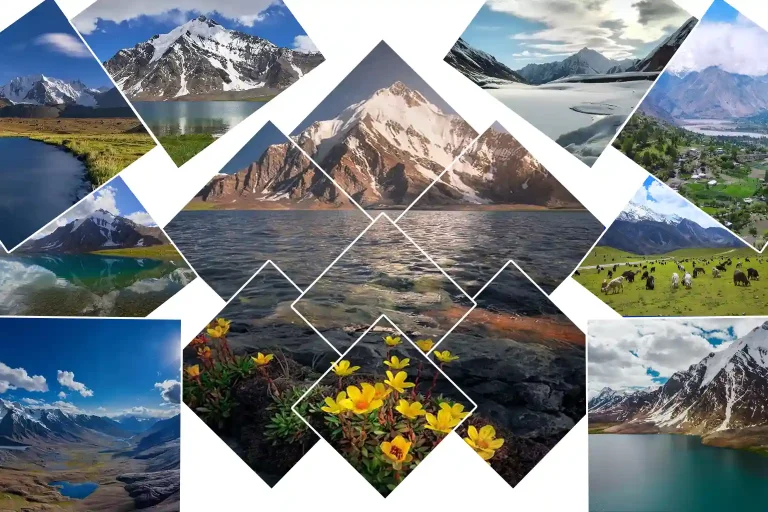
Karambar Lake is a trek, not a drive. The road takes you into the high country, and from there the journey becomes days of walking through valleys, meadows, passes, and increasingly remote mountain terrain. By the time the lake appears, the landscape has already shifted from settled northern valleys to open alpine country of rock, grass, snow, and glacier-fed streams.
At about 4,272 metres, Karambar sits in the far north of Pakistan, around the boundary of Ishkoman Valley in Gilgit-Baltistan and Broghil Valley in Upper Chitral. The Government of Gilgit-Baltistan lists it at 4,272 metres and calls it the 33rd highest lake in the world. It is also spelled Qurumbar or KarUmber Lake.
This guide covers the routes, difficulty, best months, what to do at the lake, what to pack, permits, and how to reach it. Short version: it is a multi-day high-altitude trek best done in July or August with an experienced local team, and the remoteness is the whole point.
Karambar Lake at a Glance
- Location: Ishkoman-Broghil borderlands, Gilgit-Baltistan and Upper Chitral.
- Elevation: about 4,272 metres; 33rd highest lake in the world.
- Alternate names: Qurumbar Lake, KarUmber Lake.
- Size: about 3.9 km long, 2 km wide, 52 m average depth.
- Access: multi-day trek; no road reaches the lake.
- Main routes: Mastuj-Broghil (Chitral side); Ishkoman-Chitti Boi (GB side).
- Best months: July, August, early September.
- Permits: NOC likely for the Broghil side; confirm before travel.
- Protected area: Qurumbar National Park (established 2011).
Quick Facts About Karambar Lake
| Fact | Detail |
| Location | Ishkoman-Broghil borderlands, GB / Upper Chitral |
| District | Ghizer, Gilgit-Baltistan side |
| Alternate names | Qurumbar Lake, KarUmber Lake |
| Elevation | About 4,272 metres |
| Lake type | Alpine glacial lake |
| Length | About 3.9 km |
| Maximum width | About 2 km |
| Average depth | About 52 m |
| Water source | Glacier meltwater |
| Main trekking season | June to September |
| Nearby protected area | Qurumbar National Park |
Where Is Karambar Lake Located?
Karambar sits in a remote mountain zone connected to Ishkoman Valley in Ghizer and Broghil Valley in Upper Chitral. The Government of Gilgit-Baltistan describes it as lying on the boundary of the two areas. It is not a stop inside one conventional tourist valley.
That borderland position is the useful thing to understand before planning. The lake sits in a high mountain system where valleys, passes, and old trekking routes connect the Chitral and Gilgit-Baltistan sides. Think of it as a lake in the Ishkoman-Broghil borderlands rather than a single valley address.
Two Main Sides of the Approach
- Ishkoman side (GB): part of the wider Ghizer-Ishkoman landscape, with remote terrain and glacier routes toward the lake.
- Broghil side (Chitral): linked to Mastuj and Broghil Valley, often the more practical approach, continuing from Lashkargaz.
The Landscape Around Karambar Lake
Karambar sits in a broad alpine basin where the scale changes fast. The lower journey passes through valleys and grazing land, but around the lake the vegetation thins out. Rocky slopes, high meadows, snowfields, and glacier-fed water take over, with almost none of the built environment that shapes easier northern destinations.
What the Lake Landscape Looks Like
- Long alpine basin: nearly four kilometres of water creating long views toward the surrounding ridges.
- Glacier-fed water: supplied by glacier and snowmelt, with exposed rock and sediment showing the influence of the ice.
- Clear reflections: a reported Secchi-disc clarity of about 13.75 metres; calm days produce striking mountain reflections.
What Makes Karambar Lake Different?
Karambar combines unusual elevation, size, and remoteness. It is one of Pakistan’s highest major lakes
, and the effort to reach it is part of the experience rather than an inconvenience to be removed. Here is what sets it apart.
- Elevation: about 4,272 metres above sea level.
- Size: about 3.9 km long, 2 km wide, 2.63 sq km in area, 52 m average depth.
- Remoteness: reached by trekking, not road sightseeing.
- Protected setting: part of the Qurumbar National Park landscape, established 2011.
Trekking to Karambar Lake

There is no single route everyone uses. Because Karambar sits in a borderland system, different approaches enter from Chitral, Ghizer, or other northern valleys. The route you choose sets the number of trekking days, the terrain, and the difficulty, so pick it before anything else.
Mastuj-Broghil Approach
The Chitral-side route moves through Mastuj and Broghil. Lashkargaz is the key approach point, with the lake roughly 25 kilometres farther and the final section commonly taking two to three trekking days. This is generally the more straightforward side technically.
- Starting region: Mastuj / Broghil.
- Access: road and jeep, then trekking.
- Final trek: about 25 km, 2 to 3 days from Lashkargaz.
- Difficulty: comparatively straightforward for a high-altitude route.
- Best for: travellers using the Chitral side.
Ishkoman-Chitti Boi Approach
This route enters from the Gilgit-Baltistan side through Ishkoman and the Chitti Boi area. Published information places it at roughly 45 kilometres of trekking, with demanding sections including the Chitti Boi glacier. It is a harder, more technical approach than the Broghil side.
- Starting region:
- Approximate trek: around 45 km.
- Key challenge: glacier crossings and rough mountain terrain.
- Difficulty: demanding; not for first-time trekkers.
- Best for: experienced trekkers with strong local support.
Other approaches through the Chiantar and Darkot areas, and the Chillinji Pass connection from upper Hunza, involve major passes and technical glacier terrain. These are not standard tourist treks. For most visitors, the simplest choice is one established approach with an experienced local team.
How Difficult Is the Karambar Lake Trek?
Difficulty varies a lot by approach. A Broghil-side route can be comparatively straightforward technically, while Ishkoman-side routes involve difficult glacier crossings and steep sections. Judge the trek by the specific route, not just the lake name.
What to Expect
- High elevation: the lake lies at about 4,272 metres.
- Remote terrain: services thin out well before the lake.
- Long days: multiple days of walking are required.
- Glacier sections: some approaches include crevasses and exposed crossings.
- Fast weather: conditions change quickly at altitude.
- Logistics: transport, camping, and local support must be arranged in advance.
Beginners can manage a gentler approach with an experienced team, but the harder Ishkoman-side routes suit trekkers with mountain experience. If it is your first high-altitude trek, take the Broghil side and do not treat any part of this casually.
Best Time to Visit Karambar Lake

The main trekking window is June through September, with July, August, and early September the most practical. Here is what each part of the season is like.
June
- Conditions: early-season snow can remain at higher elevations.
- Best for: experienced trekkers comfortable with changing conditions.
- Watch for: colder nights and less predictable access.
July
- Conditions: main summer trekking period.
- Best for: green alpine landscapes and accessible routes.
- Highlight: strong combination of lake colour, meadows, and mountain visibility.
August
- Conditions: peak trekking season.
- Best for: standard Karambar Lake itineraries.
- Highlight: longer trekking window and generally favourable summer conditions.
September
- Conditions: cooler and quieter.
- Best for: trekkers who prefer a less busy mountain environment.
- Watch for: falling temperatures and changing late-season weather.
Winter
Winter is not the sightseeing season. The lake and its routes face severe cold and snow, and standard trekking access becomes impractical. Treat a winter visit as a specialist expedition, not a conventional trek.
Things to Do at Karambar Lake

Karambar does not need a long list of attractions. The lake, the mountains, and the journey are the experience. These are the things worth doing once you are there.
Camp Beside the Lake
A night near Karambar gives you the lake after the day’s trekking is done, when the light is best and the group has stopped moving.
- Best for: trekkers and photographers.
- Best time: June to September.
- Highlight: sunset and sunrise over the water.
- Tip: keep the camp setup lightweight and weather-ready.
Photograph the Lake and Mountains
The size and clear water make Karambar excellent for wide landscape work, especially when the surface is calm.
- Best for: landscape photography.
- Best time: early morning and late afternoon.
- Best subjects: reflections, mountain walls, long shoreline views.
- Tip: include a person or tent for scale.
Explore the Alpine Shoreline
The shoreline shifts from rocky sections to grassy alpine ground, giving different perspectives across the basin as you move.
- Best for: slow exploration.
- Best time: daylight hours.
- Highlight: changing views across the basin.
- Tip: stay with your guide and avoid unstable shoreline sections.
Observe the High-Mountain Ecosystem
Karambar lies in a biologically important Hindu Kush-Himalaya environment, and the protected area holds alpine meadows and other high-altitude habitats.
- Best for: nature-focused travellers.
- Look for: alpine vegetation, mountain birds, changing seasonal landscapes.
- Tip: leave the environment undisturbed.
Top Places Around Karambar Lake

Karambar works best as part of a broader high-mountain journey rather than an isolated destination. These are the places that connect to it.
Qurumbar National Park
The lake sits within Qurumbar National Park, a large protected high-altitude landscape established in 2011. The park contains alpine terrain and other mountain features around the Qurumbar Valley.
Broghil Valley
Broghil is one of the best-known approaches from the Chitral side. Its high meadows, lakes, and remote settlements form part of the same mountain environment that leads toward Karambar.
Ishkoman Valley
On the Gilgit-Baltistan side, Ishkoman is another gateway into the Karambar region, particularly relevant for trekkers using the more demanding eastern approaches.
Chillinji Pass
Chillinji is part of a high-altitude connection between upper Hunza and the Karambar region. Routes involving the pass are serious mountain journeys and should only be attempted with appropriate local expertise.
Ribat Lake
Older trekking accounts describe Ribat Lake in the wider Karambar landscape, roughly a mile from Karambar. Access information for these remote side routes can change, so treat it as an optional local excursion rather than a guaranteed stop.
Getting to Karambar Lake From Islamabad
There is no simple one-road journey from Islamabad to the lake. The approach depends on the trekking route you select, and both options combine long road travel with multi-day trekking. Build in buffer time; Karambar is too remote for a plan where one delayed jeep collapses the whole trip.
From Islamabad via Chitral
- Route: Islamabad to Chitral to Mastuj to Broghil, then trek.
- Travel mix: road and jeep, then the final trekking stages.
- Note: vehicle availability and conditions change; keep buffer days.
From Islamabad via Gilgit-Baltistan
- Route: Islamabad to Gilgit to Ghizer to Ishkoman, then trek.
- Travel mix: long KKH and valley driving, then a demanding trek.
- Note: the eastern approach can be more technical depending on the route.
Permits and Current Access
Because Karambar lies close to sensitive borderland terrain, confirm access requirements before departure. Some current guidance reports NOC and permission requirements for the Broghil-side approach, including coordination with authorities in Chitral. Rules change, so this is one place where local planning matters more than a generic online itinerary.
- Likely needed: NOC for the Broghil side; check the Ishkoman side too.
- Confirm with: a licensed local operator or the relevant authorities.
- Timing: arrange permissions well before you travel, not on arrival.
- Foreign nationals: expect additional requirements in border zones.
What to Pack for Karambar Lake
Pack for a remote high-altitude expedition, even on the easier approach. At over 4,000 metres, a warm summer afternoon can turn into a very cold night. Pack for the night, not just the photograph.
Clothing
- Warm base layers
- Insulating mid-layer
- Waterproof and windproof outer shell
- Warm hat and gloves
- Extra trekking socks
Trekking Gear
- Strong trekking boots
- Trekking poles
- Headlamp
- Cold-rated sleeping bag
- Backpack rain cover and waterproof bags
Sun and Personal Protection
- UV-protective sunglasses
- Sunscreen and lip balm with sun protection
- Personal first-aid supplies
- Personal medications
Food, Water, and Electronics
- Refillable water bottles and a purification method
- High-energy snacks and lightweight trekking food
- Power bank and spare batteries
- Waterproof protection for phones and cameras
Safety Tips for Karambar Lake
Karambar is beautiful because it stays remote, but that remoteness raises the stakes. These are the points that matter most on the trail.
- Respect altitude: do not ignore headache, dizziness, nausea, or unusual fatigue.
- Acclimatise gradually: give the body time before pushing toward the lake.
- Use local guides: route knowledge matters most around glaciers and passes.
- Check current conditions: old trek reports cannot guarantee today’s route.
- Keep weather flexibility: do not force a crossing for a fixed schedule.
- Stay with the group: high-mountain terrain is not for solo wandering.
- Carry warm layers: temperatures fall fast after sunset.
- Plan permissions early: confirm access rules before travel.
- Skip technical routes casually: Chitti Boi, Chiantar, and similar need real experience.
Where to Stay Before the Trek
Karambar Lake has no conventional hotels. Your options depend on the approach, and everything above the lower settlements is a tent. Published Broghil-side accounts describe very basic accommodation and camping around the lower settlements, so organise overnight arrangements before heading into the higher terrain.
- Before trekking: a base around Chitral, Mastuj, Ghizer, or Ishkoman.
- Closer to the trail: local guesthouses where available.
- During the trek: camping along the route.
- At Karambar: a tent, not a hotel room.
Responsible Travel Around Karambar Lake
Karambar’s remoteness is part of its value. The easiest way to protect it is to leave as little trace as possible.
- Carry rubbish back out and keep campsites clean.
- Avoid disturbing alpine vegetation, rocks, and shoreline areas.
- Do not leave permanent marks or damage the landscape for photographs.
- Use local guides and services to support communities and route knowledge.
Is Karambar Lake Worth the Trek?
Yes, if you want a genuine high-altitude expedition rather than a roadside viewpoint. There are easier lakes to reach; Karambar is memorable because it asks for more. The journey crosses one of the most remote mountain environments in northern Pakistan, where the geography itself becomes the destination.
Nearly four kilometres of water, a depth measured in tens of metres, and an elevation above 4,000 metres make the scale impressive. Around it, almost nothing belongs to ordinary city life, and that absence is the attraction. For more high-altitude destinations, explore the Lakes of Pakistan and keep planning your wider Gilgit-Baltistan journey.
Conclusion
Karambar Lake arrives slowly. First the long valleys, then the rough tracks, then the high meadows and increasingly empty mountains, until the landscape finally opens around nearly four kilometres of water at more than 4,000 metres. Its beauty is obvious, but the stronger reason to go is the setting, where the worlds of Ishkoman and Broghil meet and distance matters more than tourism.
You do not simply stop at Karambar Lake. You travel into it. For more high-altitude destinations, explore the Lakes of Pakistan and continue planning your wider Gilgit-Baltistan journey before heading into the mountains.
Frequently Asked Questions
1. Where is Karambar Lake located?
Karambar Lake is in the far north of Pakistan, in the high mountain region linked to Ishkoman Valley in Gilgit-Baltistan and Broghil Valley in Upper Chitral. The Government of Gilgit-Baltistan describes it as lying on the boundary of the two areas.
2. How high is Karambar Lake?
About 4,272 metres above sea level. It is widely recognised as one of Pakistan’s highest lakes and is listed by the Government of Gilgit-Baltistan as the world’s 33rd-highest lake.
3. Is Karambar Lake the second-highest lake in Pakistan?
It is commonly described as Pakistan’s second-highest lake, though rankings vary by which lakes each list includes. The more consistent figure is its elevation of about 4,272 metres.
4. What is another name for Karambar Lake?
Karambar Lake is also known as Qurumbar Lake or KarUmber Lake. Both spellings appear in tourism and geographical sources.
5. How large is Karambar Lake?
About 3.9 kilometres long, around 2 kilometres wide at its broadest point, and roughly 2.63 square kilometres in area. Its average depth is reported at about 52 metres.
6. What is the best time to visit Karambar Lake?
The main trekking season is June through September, with July, August, and early September the most practical period.
7. How difficult is the Karambar Lake trek?
It depends strongly on the approach. The Broghil-side route can be comparatively straightforward for experienced hikers, while Ishkoman-side routes may involve difficult glacier crossings and need experienced local support.
8. Can beginners trek to Karambar Lake?
Beginners can complete a suitable route with proper preparation and a qualified local team, but Karambar is not a casual beginner hike. The elevation, remoteness, and multi-day walking all require preparation.
9. Do you need permission to visit Karambar Lake?
Access requirements can depend on the route and current security rules. Some guidance reports NOC requirements for Broghil-side travel, so confirm permissions with current local authorities or a licensed operator before departure.
