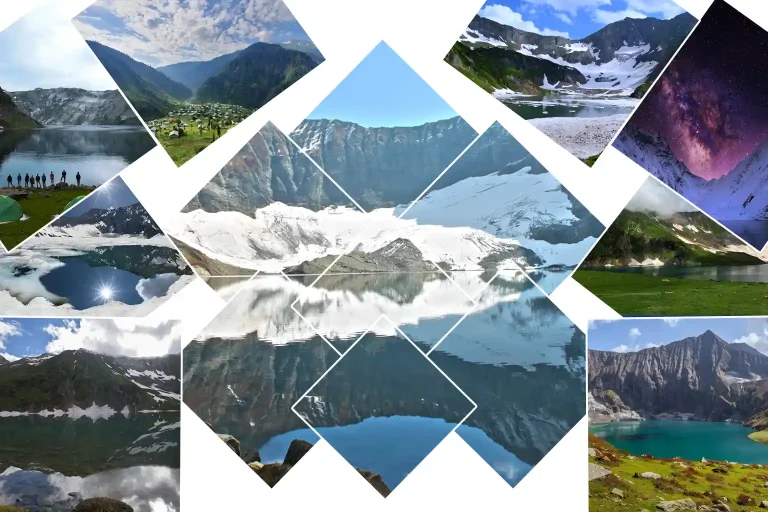
Ratti Gali Lake is a short trek, not a drive to the shore. The road into upper Neelum Valley eventually gives way to a rough mountain track, the forests thin, the valley opens into alpine meadows, and streams cut across the trail as the mountains grow with every turn. After the final climb, a turquoise lake appears between the surrounding peaks.
At around 3,700 metres, Ratti Gali is one of the best-known high-altitude alpine lakes in Neelum Valley, Azad Kashmir. It is reached through Dowarian, then a 4×4 jeep ride toward the base camp, then a short trek through the alpine landscape. It is far more rewarding than an ordinary roadside stop, without the logistics of a multi-day expedition.
This guide covers where the lake sits, the route from Dowarian, difficulty, best months, what to do there, what to pack, and how to reach it. Short version: it is a summer trip, best in July or August, combining mountain roads, pine forest, open meadows, and a short high-altitude walk before the lake comes into view.
Quick Facts About Ratti Gali Lake
| Location: | Neelum Valley, Azad Kashmir; Neelum District. |
| Nearest village: | Dowarian, on the Neelum Valley road. |
| Elevation: | About 3,700 metres (12,130 ft). |
| Lake type: | High-altitude alpine and glacial lake. |
| Main access: | Dowarian, then 4×4 jeep to base camp, then trek. |
| Trek from base camp: | Roughly 2 to 4 km; about 1 to 3 hours depending on the roadhead. |
| Main season: | June to September; July and August are busiest. |
| Winter: | Heavy snow and difficult access. |
| Known for: | Turquoise water, alpine meadows, and mountain scenery. |
Where Is Ratti Gali Lake Located?
Ratti Gali Lake is in the upper Neelum Valley of Azad Kashmir, in Neelum District. The usual approach begins at Dowarian, a settlement on the Neelum Valley road, from where a rough jeep track climbs toward the Ratti Gali base camp before the final section on foot.
Dowarian is more than a point on the map. It is where the normal valley journey starts turning into a mountain adventure: the tarmac ends, the jeeps wait, and the climb into the high country begins.
From Muzaffarabad to Dowarian
Travellers from Islamabad generally head toward Muzaffarabad before continuing deeper into Neelum Valley, following the valley road toward Athmuqam and Dowarian. Road conditions, traffic, and weather all make travel times variable, so leave a buffer rather than relying on one fixed schedule.
From Dowarian to the Base Camp
From Dowarian, the road becomes considerably rougher. A local 4×4 jeep normally covers the mountain track toward the base camp, roughly 16 to 18 kilometres, commonly around 1.5 to 2 hours depending on conditions. This is the roughest vehicle section of the whole trip.
From the Base Camp to the Lake
The vehicle journey ends before the lake. The final section is a mountain trek through meadows, streams, and increasingly open alpine terrain, roughly 2 to 4 kilometres depending on the current roadhead and route. This is the stretch where the destination starts to feel earned.
The Landscape Around Ratti Gali Lake

Ratti Gali’s character comes from the contrast between its turquoise water and the rugged alpine landscape around it. Lower sections of the journey pass through forest, while the higher route opens into grassy meadows and exposed mountain terrain. In summer the slopes turn green and colourful, and snow can linger on the higher ridges even while the lower meadows are in full bloom.
Alpine Meadows and Wildflowers
The meadows are one of the most attractive parts of the final trek. Through the warmer months, patches of alpine vegetation and seasonal flowers add colour to the otherwise rocky landscape. As you climb, the trail gradually leaves the forest behind and enters a much more open world where the mountains dominate the horizon.
Turquoise Water
The lake is best known for its vivid blue-green colour. Glacial and snowmelt water gives it an alpine character, while sunlight and the surrounding sediment change how the water looks from different viewpoints. On calm days, reflections can make the lake seem even larger than it is.
Mountains Around the Lake
Ratti Gali sits in a natural mountain bowl, with ridges and snow-covered slopes surrounding the water. The final approach is especially rewarding because the lake is not fully visible until you reach the higher part of the trail, so the first clear view arrives as a genuine reveal rather than something you see from the road.
The Ratti Gali Lake Trek

Ratti Gali is one of the more accessible high-altitude lake experiences in Pakistan because the 4×4 route cuts down the amount of walking. That does not make it effortless. The trail still climbs to around 3,700 metres, and the combination of altitude, uneven ground, and steep sections can make the final approach tiring.
Standard Route: Dowarian to Ratti Gali
The typical journey runs Dowarian to a 4×4 jeep track, to the Ratti Gali base camp, then a trek to the lake. The exact jeep drop-off varies with weather and road condition. From the base camp, the trail generally passes through the following.
- Alpine meadows
- Rocky sections
- Small streams
- Open grassy slopes
- Occasional snow patches at higher elevations
Reported trek times vary from about 1 to 2 hours at the current jeep roadhead up to 3 to 4 hours from the lower base-camp area. For planning, allow extra time rather than assuming the shortest reported duration.
Alternate Approaches
Ratti Gali can also be linked with longer trekking routes from the wider Kaghan Valley and Jalkhad side, involving Jalkhad, Noori Lake, and Hans Raj Lake. These are considerably more demanding than the standard Dowarian approach and need proper trekking planning. For a standard sightseeing trip, the Dowarian route is the practical choice.
How Difficult Is the Ratti Gali Lake Trek?
The standard Ratti Gali route is generally moderate, with the difficulty coming mainly from altitude and uphill terrain rather than technical climbing. It is manageable for reasonably fit travellers, but conditions change with weather, trail condition, and the exact jeep drop-off point.
What Makes It Challenging?
- High altitude: the lake sits around 3,700 metres.
- Steady ascent: the final trail climbs continuously in places.
- Uneven terrain: rocky and muddy sections can occur.
- Weather: rain, cloud, and cold can develop quickly.
- Snow: patches can remain around higher sections in early summer.
- Jeep road: the ride to base camp can be rough and uncomfortable.
Is Ratti Gali Suitable for Beginners?
For travellers with average fitness, the standard base-camp trek is achievable with the right preparation. But do not confuse accessibility with a casual walk. Altitude affects people differently, and a trek that feels easy lower down can become tiring at 3,700 metres. Wear proper footwear, start early, and give yourself enough time to ascend and return without rushing.
Best Time to Visit Ratti Gali Lake

Ratti Gali is a strongly seasonal destination. Snow affects the lake and trails for much of the colder year, while the warmer months bring green meadows and the most practical trekking conditions. June through September is the useful window, with July and August the most popular. Here is what each part of the season is like.
June
- Conditions: snow may remain at higher elevations.
- Best for: early-season travellers with flexible plans.
- Highlight: fresh green landscapes as summer begins.
- Watch for: unstable weather and remaining snow.
July
- Conditions: main trekking season.
- Best for: green meadows and alpine scenery.
- Highlight: wildflowers and more accessible trails.
- Watch for: weekend and holiday crowds.
August
- Conditions: peak summer access.
- Best for: first-time visitors and photographers.
- Highlight: strong combination of lake colour, meadows, and mountain views.
- Watch for: afternoon clouds and busy periods.
September
- Conditions: cooler and generally quieter.
- Best for: travellers who prefer fewer visitors.
- Highlight: crisp mountain scenery.
- Watch for: colder nights and changing road conditions.
October and Later
Conditions become increasingly uncertain as temperatures fall. Snow can return to the higher route and access to the lake can become difficult. Winter is not the normal sightseeing season.
Things to Do at Ratti Gali Lake

Ratti Gali does not need a long list of commercial attractions. The lake, the trek, and the surrounding alpine environment are the main experience. These are the things worth doing once you are there.
Trek Through the Alpine Meadows
The final walk is part of what makes the destination rewarding, moving through meadows and streams before the lake reveals itself.
- Best for: hikers and nature lovers.
- Best season: June to September.
- Highlight: meadows, streams, and mountain views.
- Tip: start early so you have enough daylight for the return.
Photograph the Lake
Ratti Gali’s turquoise water and surrounding peaks make it one of the strongest landscape-photography destinations in Neelum Valley.
- Best for: landscape photography.
- Best time: early morning and late afternoon.
- Best subjects: lake reflections, wildflowers, and mountain ridges.
- Tip: include people or horses to show the scale of the landscape.
Camp at the Base Camp
Camping is available around the base-camp area, and some visitors arrange lakeside camping depending on current local conditions.
- Best for: adventure travellers.
- Best season:
- Highlight: mountain evenings and early starts.
- Tip: bring proper cold-weather sleeping equipment.
Ride a Horse Toward the Lake
Horses are available in the area for visitors who want to reduce the walking on the final approach.
- Best for: families and less experienced trekkers.
- Best season: main trekking months.
- Tip: confirm availability and current rates locally.
Enjoy the Night Sky
Away from major urban centres, the Ratti Gali area can offer dark mountain skies on a clear night.
- Best for: campers and photographers.
- Best time: clear summer nights.
- Highlight: stars above the alpine landscape.
- Tip: keep a warm layer nearby; temperatures fall quickly after sunset.
Places to Visit Near Ratti Gali Lake

Ratti Gali fits naturally into a wider Neelum Valley itinerary. These places are best treated as highlights around the trek rather than a separate sightseeing circuit.
Dowarian
Dowarian is the main gateway for the Ratti Gali route, where travellers arrange jeeps and, when needed, local trekking assistance before heading toward the base camp.
Neelum Valley
The valley itself is worth exploring rather than treating only as a road to Ratti Gali. The Neelum River, forests, villages, and mountain slopes create a scenic journey from Muzaffarabad toward the upper valley.
Hans Raj Lake
Hans Raj lake is one of the high-altitude lakes linked with longer trekking routes around Ratti Gali, described as roughly a four-hour trek from the base-camp area.
Gattian Lake
Reached through Gattian Pass, this forms another possible extension for experienced trekkers, with an additional trekking section of around two to three hours from the Ratti Gali route.
Arang Kel
Travellers with more time can extend a Neelum trip toward Arang Kel, a popular highland meadow around Kel. It is a separate destination rather than a side trip from the lake, so plan it as part of a longer Neelum Valley itinerary.
Getting to Ratti Gali Lake From Islamabad
For travellers starting in Islamabad, reaching Ratti Gali combines a long valley drive with a rough jeep track and a short trek. Once the jeep can go no further, the rest is on foot. The route breaks into clear stages.
- Stage 1, road: Islamabad to Muzaffarabad via Murree.
- Stage 2, road: Muzaffarabad through Neelum Valley to Athmuqam and Dowarian, roughly 4 to 6 hours.
- Stage 3, jeep: Dowarian to the base camp by 4×4, roughly 16 to 18 km and 1.5 to 2 hours.
- Stage 4, trek: base camp on foot through meadows to Ratti Gali Lake.
The exact travel time varies because the final part of the journey involves mountain roads and a rough jeep track, so build in buffer time and do not schedule a flight or long onward journey immediately after returning.
Where to Stay Before the Trek
There is no conventional hotel beside Ratti Gali Lake. Accommodation is generally arranged lower in the valley or at the trekking base, so sort your overnight logistics before you begin.
- Dowarian: basic guesthouses and local accommodation.
- Base camp: camping and seasonal tent facilities.
- Near the lake: camping may be possible depending on current local arrangements.
- Sharda or Keran: more accommodation choices for a wider Neelum Valley trip.
What to Pack for Ratti Gali Lake
Ratti Gali may be relatively accessible, but it is still a high-altitude destination. Even in summer, temperatures around the lake drop quickly after sunset, so pack for the mountain evening, not just the sunny afternoon.
Clothing
- Warm base layers
- Fleece or insulating jacket
- Windproof and waterproof outer layer
- Warm hat and gloves
- Extra socks
Trekking Gear
- Good trekking shoes or boots
- Trekking poles
- Headlamp
- Small backpack
- Rain protection and waterproof bags
Sun and Personal Protection
- Sunglasses
- Sunscreen and lip balm
- Personal medications
- Basic first-aid supplies
Food, Water, and Electronics
- Refillable water bottle and a purification method
- Energy snacks and a packed meal for the trek
- Power bank and spare batteries
- Waterproof protection for phone and camera
Ratti Gali Lake Safety Tips
The standard route is manageable, but the environment is still remote and high-altitude. These are the points that matter most.
- Respect altitude: do not ignore headache, dizziness, nausea, or unusual fatigue.
- Use reliable jeeps: the mountain road is rough, so experienced local drivers are preferable.
- Check road conditions: rain, landslides, and snow can affect access.
- Start early: more daylight gives you flexibility for the trek and return.
- Carry warm layers: temperatures can drop quickly.
- Stay with your group: avoid wandering onto unfamiliar side trails.
- Watch the weather: mountain conditions can change quickly.
- Keep extra time: do not schedule onward travel immediately after returning.
Responsible Travel Around Ratti Gali Lake
Ratti Gali is popular, but its alpine environment remains fragile. The easiest way to protect it is to leave it looking almost exactly as you found it.
- Carry all rubbish back with you; leave no plastic or packaging at the trail or lake.
- Do not damage wildflowers or vegetation for photographs.
- Avoid disturbing grazing animals and wildlife.
- Use established camping areas and respect local communities, guides, drivers, and vendors.
Why Ratti Gali Lake Is Worth Visiting
There are easier lakes to photograph, and harder lakes to reach. Ratti Gali sits between the two. You can reach its base camp by 4×4, but you still walk through alpine terrain before the lake reveals itself, and that short effort is enough to create a real sense of transition: the valley disappears behind you, the trees thin, the meadows open, and then the turquoise water appears beneath the surrounding peaks.
That combination is what makes Ratti Gali so popular. It gives travellers a genuine high-altitude alpine experience without the logistics of a long expedition into the far Karakoram. For another Neelum lake that rewards a similar effort, see Shounter Lake.
Conclusion
Ratti Gali Lake is reached in stages. First the journey through Neelum Valley, then the rough jeep track that leaves the main road behind, and finally the walk through alpine meadows toward a lake that stays hidden until the higher trail opens. That gradual reveal is part of its appeal.
At around 3,700 metres, Ratti Gali combines turquoise alpine water, green summer meadows, snow-covered mountain scenery, and an accessible trek into one of Neelum Valley’s most memorable destinations. For travellers exploring Azad Kashmir, it is the point where the road ends and the mountains begin.
Explore more of the Lakes of Pakistan and continue discovering the alpine landscapes, valleys, and trekking routes of northern Pakistan.
Frequently Asked Questions
Where is Ratti Gali Lake located?
Ratti Gali Lake is in Neelum Valley, Azad Kashmir, in Neelum District. The usual approach begins from Dowarian on the Neelum Valley road.
How high is Ratti Gali Lake?
Ratti Gali Lake is approximately 3,700 metres (12,130 feet) above sea level.
How do you reach Ratti Gali Lake?
The standard route is Dowarian, then a 4×4 jeep to the base camp, then a trek to the lake. The jeep track is rough, and the final trekking distance varies depending on where the vehicle can currently reach.
How long is the Ratti Gali Lake trek?
From the current jeep roadhead, recent sources commonly report roughly 1 to 3 hours of walking, while lower base-camp starts can be 3 to 4 hours. The difference reflects changing road access and route conditions.
What is the best time to visit Ratti Gali Lake?
July and August are generally the most practical months, while June and September can also suit depending on snow and road conditions. The broader trekking season is June through September.
Is Ratti Gali Lake suitable for beginners?
The standard base-camp trek can be manageable for reasonably fit beginners, but the lake is at high altitude and the trail includes uphill and uneven sections. Proper footwear, warm clothing, and sensible pacing all matter.
Can you visit Ratti Gali Lake by jeep?
A jeep can take visitors from Dowarian toward the base camp, but the final approach to the lake is on foot. Horses may also be available locally for part of the route.
Is there camping at Ratti Gali Lake?
Yes. Camping is available around the base-camp area, and lakeside camping may be possible depending on current local arrangements.
What other lakes can you visit around Ratti Gali?
Longer trekking routes can connect with Hans Raj Lake and Gattian Lake, while the wider Neelum Valley offers many other scenic destinations.
Is Ratti Gali Lake accessible in winter?
Winter access is difficult because the lake and surrounding high country receive heavy snow. Standard trips are planned for the warmer months rather than winter.
