Mingora does not usually feel like the starting point for a hidden waterfall.
It is Swat’s busiest urban center, surrounded by roads, markets, neighborhoods, and the movement of people entering the valley. But within roughly an hour beyond the city, the landscape begins to climb toward Manglawar and the smaller mountain settlement of Shingrai.
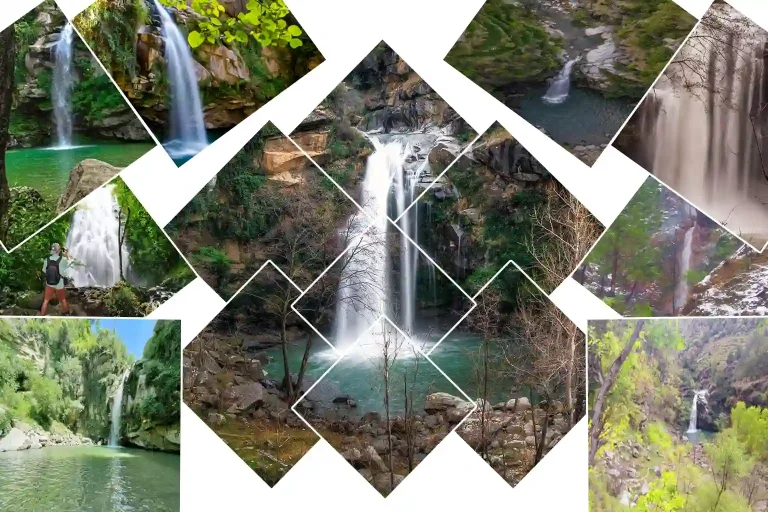
There, below the village, water drops from a rocky ledge into a green pool enclosed by trees, boulders, and steep slopes.
That is Shingrai Waterfall.
Located in the Shingrai-Manglawar area of Swat District, Khyber Pakhtunkhwa, the waterfall is commonly reported around 18 to 20 kilometers from Mingora. Local reporting places the fall at roughly 30 to 35 feet high and around 70 feet across, making it far smaller than Swat’s tallest waterfall claims but visually distinctive because of the pool and compact rocky basin below.
Shingrai is also known locally as Shingro Dand. The experience is straightforward compared with remote Swat waterfalls: drive toward Shingrai village, leave the easier road behind near the settlement, and continue down toward the waterfall on foot or by whatever local access is usable at the time.
The short distance from Mingora is what makes Shingrai unusual. It feels hidden without being far away.
Shingrai Waterfall Quick Facts
| Detail | Information |
| Location | Shingrai village, Manglawar area, Swat District, Khyber Pakhtunkhwa |
| Distance from Mingora | Commonly reported around 18-20 km |
| Typical drive | Roughly 40-60 minutes to the Shingrai side, depending on road and traffic conditions |
| Reported height | About 30-35 ft |
| Reported width | About 70 ft across |
| Local name | Shingro Dand |
| Access | Road to Shingrai village, followed by a rougher final approach / short walk |
| Common walking estimate | Around 20-30 minutes from the village-side access in traveler reports |
| Best broad season | April to September; spring and early summer are especially attractive |
| Best for | Half-day trips, photography, short hiking, picnics, forest scenery |
| Main caution | Steep/rough access and a natural pool of uncertain depth |
Route conditions below Shingrai village have changed over time. Older reporting described the final road as rough or unpaved, so current local guidance matters more than assuming the last kilometer will always be driveable.
What Makes Shingrai Waterfall Different?
Shingrai is not a giant waterfall, and that is exactly why the setting matters so much.
The main drop falls into an enclosed natural pool rather than disappearing into a wide riverbed. Rock walls curve around the basin. Trees and thick vegetation rise above the water. Large boulders sit along the edges, giving the place the feeling of a small natural amphitheater.
The waterfall itself appears clean and concentrated from the front: a white vertical flow against darker rock, widening as it reaches the pool.
From higher ground, the experience changes. The pool becomes the center of the scene, with the waterfall entering from one end and the surrounding mountain slopes framing it from above.
This compact structure is Shingrai’s strongest visual feature.
You are not looking across a huge open valley. You are looking into a small pocket of water and green landscape hidden inside the lower Swat hills.
Where Is Shingrai Waterfall?
Shingrai Waterfall is located near Shingrai village in the Manglawar area of Swat District, northeast of Mingora.
The useful geographic relationship is:
Shingrai Waterfall
↓
Shingrai village / Manglawar area
↓
Mingora side of Swat
↓
Swat District
↓
Khyber Pakhtunkhwa
Mingora is the practical base for most visitors because it provides accommodation, transport, restaurants, and the easiest starting point for a half-day trip.
The broader Swat Valley story includes its river, towns, upper valleys, forests, and regional travel routes, but Shingrai itself sits within a much smaller mountain setting close to Mingora.
For a Shingrai visit, that wider regional context matters mainly as orientation. The waterfall, its pool, its access, and its immediate mountain setting are what define the trip.
How to Reach Shingrai Waterfall from Mingora
The most common approach begins from Mingora and heads toward the Manglawar side of the valley.
The approach runs from the Sangota-Manglawar side toward Shingrai village. The road to the village has been improved over time, while the lower section toward the waterfall has historically remained rougher and more changeable.
That gives the journey a useful structure:
Leave Mingora toward Sangota / Manglawar
↓
Continue toward Shingrai village
↓
Park or stop where the lower road becomes unsuitable
↓
Walk down toward Shingrai Waterfall
The entire destination is close enough to Mingora for a half-day outing, but the final approach should not be judged from city-road distance alone.
Mountain access changes after rain, erosion, road repair, and local construction. Ask in Shingrai village where vehicles should stop on the day you visit rather than relying on an old map pin or an exact parking point from a previous trip.
The Walk Down to Shingrai Waterfall

Shingrai sits below the village, so reaching the water involves a descent and then a climb back out.
A final walk of around 20 to 30 minutes is commonly described from the village-side access, although the exact distance changes with where vehicles can stop and the condition of the lower track.
The exact number of minutes matters less than the terrain.
Expect a natural mountain path rather than a flat recreational walkway.
- Uneven ground and loose stone
- Steeper sections on the descent
- Rougher footing close to the waterfall
- Wet or slippery rock near the pool
- A more tiring climb back toward the village
Shoes with proper grip are the most useful piece of equipment for the visit.
If recent rain has made the path muddy or unstable, slow down and turn back if anyone in the group is uncomfortable.
How High Is Shingrai Waterfall?
Shingrai is commonly reported at approximately 30 to 35 feet high and around 70 feet across.
The figures are repeated across several travel references and work well as approximate dimensions rather than exact surveyed measurements.
They should not be read as a formal surveyed record.
At Shingrai, height is not the main reason the waterfall feels dramatic anyway.
The enclosed pool, steep rock walls, and trees around the basin make a relatively compact waterfall feel larger once you are standing below it.
Shingro Dand: The Local Name
Shingrai Waterfall is also commonly referred to as Shingro Dand in local reporting.
The name Shingro Dand appears in local reporting and is used for the same waterfall-and-pool setting.
Travelers may therefore encounter both Shingrai Waterfall and Shingro Dand when asking for directions around Manglawar.
The important point for travelers is simple: Shingrai Waterfall and Shingro Dand generally refer to the same local attraction.
The Pool Below Shingrai Waterfall

The pool is one of Shingrai’s most attractive features – and one of the reasons visitors should be cautious.
Its green-blue surface can look calm even when the waterfall is carrying a stronger flow. The pool’s exact depth is not reliably established, so visitors should treat deeper sections with caution.
What matters is not an exact depth figure but the difficulty of judging a natural pool from the bank.
Natural pools often change abruptly, hide submerged rock, and become harder to judge where falling water disturbs the surface.
If people are swimming when you arrive, that is not proof that the water is safe for everyone.
Non-swimmers should remain out of deep sections. Avoid jumping from rocks, and keep children close to the bank. If flow is unusually strong after snowmelt or rain, enjoy the pool from dry ground.
Best Time to Visit Shingrai Waterfall

For most visitors, April to September is the most useful planning window.
The waterfall can remain visitable across a wider spring-to-autumn season, but spring and summer generally offer the most practical combination of greenery, accessible conditions, and visible flow.
Spring
The surrounding hills become greener and temperatures are comfortable for the short walk. Spring can also bring stronger flow, making the waterfall especially attractive for photography.
Early summer
Water levels can remain strong while warmer weather makes the shaded pool and forested basin especially appealing. The trade-off is more local visitor traffic on weekends.
Mid summer
Shingrai has historically attracted people looking for relief from the heat. Water level can rise during the warmer snowmelt period in Swat, but stronger flow also means the pool and wet rock deserve more caution.
Late summer and early autumn
The waterfall can remain worth visiting into September and sometimes October, depending on recent rainfall and seasonal flow. The scene may be quieter than at the height of summer.
Winter
The site is not best treated as a standard winter attraction. Colder weather, weaker visitor services, and changing mountain access make local checking more important before planning a trip.
Visit Early If You Want a Quieter Waterfall
Shingrai is close enough to Mingora that local visitors can reach it without a major travel plan.
That is an advantage on a weekday and a reason to expect more people on summer weekends.
An early start gives you cooler walking conditions, more space around the pool, and better chances of photographing the waterfall before groups gather at the base.
It also leaves more daylight for the uphill return if the rough approach takes longer than expected.
Is Shingrai Waterfall Suitable for Families?
Shingrai can work as a family outing, but it should not be marketed as effortless access for every age group.
The drive from Mingora is short, which makes the destination easier than remote Swat waterfalls. The final descent is the deciding factor.
Families with school-age children who are comfortable on uneven paths may find the walk manageable in dry weather.
Very young children, older visitors, or anyone with mobility limitations may struggle with the descent and especially the climb back up.
The pool adds another reason for close supervision.
A family trip should focus on the waterfall, picnic, and landscape rather than treating swimming as the main activity.
Photography at Shingrai Waterfall

Use the pool as part of the composition
Shingrai photographs best when the waterfall and the green basin are shown together. The pool is one of the site’s defining visual features and gives the image more depth.
Keep some of the rock walls in frame
The enclosed setting makes the fall feel more secluded. Cropping too tightly around the water removes that sense of place.
Photograph from higher ground if the path is safe
An elevated view can show the pool, surrounding trees, and the waterfall as one compact landscape.
Look for seasonal color
Spring greenery, darker wet rock, and the changing color of the pool create stronger photographs than the waterfall alone.
Protect your camera near the base
Spray, wet stone, and splashes from visitors can reach lenses and phones. Carry a basic protective pouch and cleaning cloth.
Do not climb for a dramatic angle
The rock around the basin can be slick. A safer wide viewpoint is more useful than standing on unstable wet stone.
What to Carry
Shoes with good grip
The short descent becomes much easier when footwear is suitable for loose and wet ground.
Drinking water
Carry enough for the walk and climb back instead of assuming refreshments will be available below the village.
Light snacks
Useful for a half-day picnic without depending on facilities at the waterfall.
Sun protection
Some parts of the approach are exposed even though the waterfall basin itself is shaded.
Waterproof phone or camera protection
Useful around the pool and waterfall spray.
Small first-aid kit
Helpful for minor cuts or slips on rough ground.
Rubbish bag
Carry wrappers and bottles back toward the village rather than leaving them beside the water.
Safety at Shingrai Waterfall
Shingrai does not require an expedition, but the combination of a rough descent and natural pool deserves basic caution.
Keep the rules simple:
- Wear shoes with reliable grip.
- Avoid running on wet rock near the pool.
- Do not dive into water of unknown depth.
- Keep non-swimmers and young children away from deep sections.
- Be more cautious when water flow is stronger after rain or seasonal melt.
- Use the current local route rather than forcing a damaged or closed track.
- Allow enough daylight for the uphill return.
- Follow any instructions from local residents or authorities.
The waterfall can be enjoyed fully without entering the pool.
Shingrai and the Wider Swat Valley
Shingrai belongs to Swat, but it represents a different kind of Swat trip from the long drive to Kalam or the forest trek to Jarogo.
Its value is proximity.
A traveler staying in Mingora can reach the Manglawar side, walk down to a genuine mountain waterfall, spend a few hours beside the pool, and return without committing an entire day to the upper valley.
The wider Swat Valley offers long drives, upper-valley landscapes, forests, and larger itineraries. Shingrai works differently: it is a compact waterfall outing centered on one short route, one natural pool, and the lower hills close to Mingora.
For trip planning, the relationship is simple: stay in Mingora, set aside a half-day, and treat Shingrai as the main nature stop rather than squeezing it into a rushed list of distant attractions.
Responsible Travel at Shingrai
Small waterfall basins feel pollution quickly.
There is limited space around Shingrai’s pool, so bottles, food packaging, and picnic waste become visible almost immediately when visitors leave them behind.
Carry rubbish back to the village.
Do not throw anything into the pool.
Avoid carving names into rock or tree bark.
Keep music and shouting reasonable around other visitors and nearby communities.
Stay on the established path instead of cutting new shortcuts down the slope.
Shingrai is close enough to Mingora to attract more people as awareness grows. That makes low-impact visiting more important, not less.
Final Thoughts
Shingrai Waterfall works because it is compact.
A short journey from Mingora leads into the Manglawar hills, the road narrows toward Shingrai village, and a final descent reveals a waterfall dropping into a green pool between rock and trees.
There is no giant height claim to chase and no long expedition required.
The experience is simpler: cool water, an enclosed mountain basin, a short hike, and enough separation from Mingora to make the city feel much farther away than it really is.
Visit in spring or summer, start early when possible, wear proper shoes, and treat the pool carefully.
Shingrai does not need to be one of Swat’s biggest waterfalls to deserve its own story.
Its strength is how quickly the landscape changes once you leave the city behind.
Frequently Asked Questions
1. Where is Shingrai Waterfall located?
Shingrai Waterfall is located near Shingrai village in the Manglawar area of Swat District, Khyber Pakhtunkhwa, northeast of Mingora.
2. How far is Shingrai Waterfall from Mingora?
Local reporting commonly places the waterfall around 18 to 20 kilometers from Mingora. Driving time to the village side is often around 40 to 60 minutes depending on traffic and road conditions.
3. How high is Shingrai Waterfall?
The waterfall is commonly reported at about 30 to 35 feet high and roughly 70 feet across. These should be treated as approximate travel measurements.
4. Is Shingrai Waterfall also called Shingro Dand?
Yes. Shingro Dand is a common local name used for the same waterfall-and-pool setting.
5. How do you reach Shingrai Waterfall?
Travel from Mingora toward Sangota and Manglawar, continue to Shingrai village, and then use the current local access toward the waterfall. The last section has historically been rough, and visitors commonly complete the final approach on foot.
6. How long is the walk to Shingrai Waterfall?
Current traveler reports often describe around 20 to 30 minutes of walking from the village-side access, though the exact distance changes with where vehicles can stop and the condition of the lower track.
7. What is the best time to visit Shingrai Waterfall?
April to September is a useful broad window. Spring and early summer generally offer green surroundings, comfortable walking weather, and attractive flow.
8. Can you swim at Shingrai Waterfall?
People do enter the pool, but its exact depth is not clearly established. The natural pool should be approached cautiously: non-swimmers should stay out of deeper sections, and visitors should avoid diving or entering during unusually strong flow.
9. Is Shingrai Waterfall suitable for families?
It can be suitable for active families in dry weather, but the final descent and natural pool require supervision. Very young children, visitors over 70, and people with mobility limitations may find the path difficult.
10. Can Shingrai Waterfall be visited as a half-day trip from Mingora?
Yes. Its proximity to Mingora makes Shingrai one of the more practical waterfall outings in lower Swat, provided you allow enough time for the descent, visit, and climb back.
11. Do I need a 4×4 for Shingrai Waterfall?
A 4×4 is not normally necessary for the main road to Shingrai village. The lower access has historically been rough, so the sensible approach is to stop where the road becomes unsuitable and continue on foot unless local conditions clearly allow further vehicle access.
12. Is Shingrai the same waterfall as Jarogo?
No. Shingrai and Jarogo are separate Swat waterfalls. Shingrai is near Manglawar and Mingora, while Jarogo is reached through the Matta, Beha, and Chatekal side of Swat and involves a different journey and longer mountain approach.
