Skardu does not ease you in. The Karakoram arrives ridge after ridge until the plane drops into the valley and you understand for the first time where you actually are.
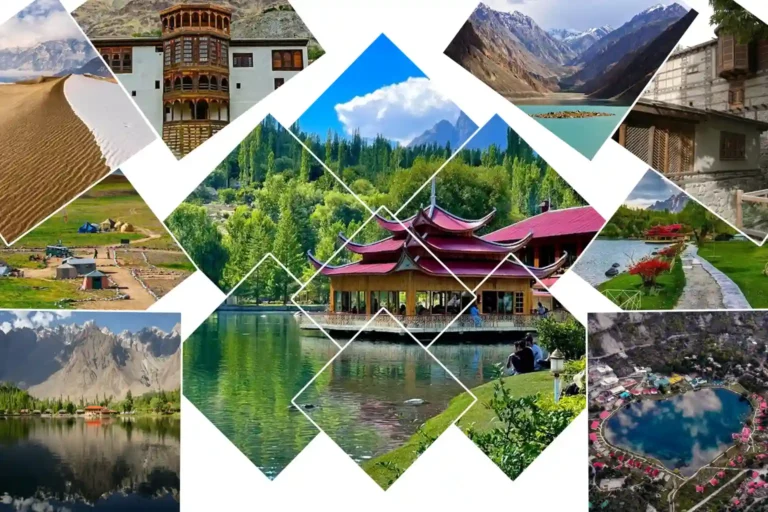
Shangrila Lake is about 30 kilometres from Skardu city, a drive through Kachura village that ends with water appearing through the trees before you have had time to prepare for it. A heart-shaped lake at 2,500 metres, surrounded by fruit orchards and Karakoram peaks. The word Shangrila means heaven on earth. The name was not applied carelessly.
Known formally as Lower Kachura Lake, the resort surrounding it was founded in 1983 by Brigadier Muhammad Aslam Khan and was the first tourist resort in Pakistan’s northern areas. People come to Skardu for K2 base camps, for Deosai, for Shigar. They stop at Shangrila Lake for an afternoon and often find it the memory that stays.
Where is Shangrila Lake Located?
Shangrila Lake sits in Kachura village, Skardu District, in the Gilgit-Baltistan region of northern Pakistan. It lies at an elevation of 2,500 metres above sea level, within the Karakoram mountain range, and is fed by water flowing down from Upper Kachura Lake on the slope above it.
The lake is approximately 30 kilometres from Skardu city by road, a drive of around 30 to 40 minutes through the valley. Skardu itself sits at 2,228 metres and serves as the capital of Skardu District, the gateway city for most of Gilgit-Baltistan’s major destinations including K2 base camp, Deosai Plains, and Shigar Fort.
Within Gilgit-Baltistan
Gilgit-Baltistan is Pakistan’s northernmost administrative territory, bordering China to the north and Afghanistan to the northwest. It is home to five of the world’s 14 eight-thousanders, including K2, the second highest mountain on earth. Skardu District is the largest district within Gilgit-Baltistan and one of the most visited for both trekking and leisure tourism.
Shangrila Lake sits within this landscape not as a remote wilderness destination but as an accessible point of concentrated beauty, a place where the Karakoram’s scale is visible from a lakeside garden rather than a base camp.
Key Location Facts
- District: Skardu District, Gilgit-Baltistan
- Elevation: 2,500 metres above sea level
- Distance from Skardu city: Approximately 30 kilometres, 30 to 40 minutes by road
- Also known as: Lower Kachura Lake, Zharba Tso in the local Balti language
- Lake depth: Approximately 30 metres
- Coordinates: Kachura village, on the road toward Shigar Valley
Kachura Lake: Upper and Lower

Kachura is not one lake but two. Lower Kachura is shaped by presence, cottages, pathways, the sound of boats on water, the resort that gave it its name. Upper Kachura feels withdrawn, deeper, quieter, held within forest rather than garden. They share a slope and a name. The experience of each is entirely separate.
Lower Kachura Lake: Shangrila Lake
Lower Kachura Lake is Shangrila Lake. The resort encircles it, the gardens press to its edge, and the red-roofed cottages along the shore have made it one of the most recognisable lake settings in Pakistan.
- Shape: Heart-shaped, visible from higher ground and a recurring element in aerial photography of Skardu
- Elevation: 2,500 metres above sea level
- Depth: Approximately 30 metres
- Water source: Fed by Upper Kachura Lake on the slope above
- Best for: Families, resort stays, photography, relaxed lakeside visits
Upper Kachura Lake
Upper Kachura sits above Shangrila, reachable by a 30-minute walk through pine forest. The infrastructure disappears. The depth increases to 70 metres. The water shifts between green and blue with the light. It is the version of Kachura that belongs entirely to the mountains.
- Elevation: Slightly above Lower Kachura on the same slope
- Depth: Approximately 70 metres
- Access: 30-minute uphill walk or short jeep ride from Shangrila Resort
- Best for: Solitude, photographers, hikers wanting raw terrain over resort setting
Which One to Visit
Visit both. Most travellers overnight at Shangrila and make the short trip up to Upper Kachura in the morning before the light shifts. The contrast between the two is the point.
The Shangrila Resort Skardu

The lake did not shape the resort. The resort reshaped how the lake is seen. Founded in 1983 by Brigadier Muhammad Aslam Khan, the first commander of the Northern Scouts, it was the first tourist resort established in Pakistan’s northern areas. Brigadier Aslam chose this location deliberately, a heart-shaped lake in a valley surrounded by Karakoram peaks, and called it Heaven on Earth. The name Shangrila followed from that description and eventually replaced the lake’s formal name in common use.
History and Founding
- Founded: 1983 by Brigadier Muhammad Aslam Khan Afridi
- Significance: First ever tourist resort established in Pakistan’s northern areas
- Name origin: Shangrila is a Tibetan-influenced term meaning heaven on earth, applied by the founder
- Recognition: Shangrila Resort won the Wiki Loves Earth competition in 2015 for its visual setting
The DC-3 Aircraft Restaurant
The most distinctive feature of Shangrila Resort is a DC-3 aircraft fuselage that sits at the lakeside and functions as a restaurant. The aircraft was grounded near Skardu following an incident and was transported to the resort grounds by Brigadier Aslam, who had it converted into a dining space overlooking the lake. It is now one of the most photographed objects in Gilgit-Baltistan and the detail most travellers mention when describing Shangrila.
Metal against water, history against landscape. Eating inside the fuselage with the lake a few metres below and the Karakoram peaks visible through the windows is the kind of experience that does not exist anywhere else in Pakistan. The DC-3 Cafe operates alongside the Pagoda Restaurant and the Rock Lounge.
Accommodation
The resort’s cottages and suites are positioned along the lakeside, designed so that most rooms have a direct view of the water and the surrounding mountains.
- Lakeside cottages: Dotted along the shoreline, each with lake-facing views
- VIP suites: Larger suites for those wanting more space and elevated views
- Chalets: Standalone accommodation units within the resort grounds
- Capacity: Conference and event facilities for up to 100 guests
Resort Facilities
- Dining: DC-3 Cafe, Pagoda Restaurant, Rock Lounge Cafe, Snack Bar, Lake View Rest
- Activities: Boating on the lake, jogging track, trekking routes, viewpoint
- Attractions: Mini zoo with wild birds, trout hatchery, resort gardens
- Services: Jeep safaris to Upper Kachura, Khaplu Fort and surrounding areas
- Events: Conference and social event facilities with lakeside setting
Shangrila Lake Photography and Scenic Beauty
Shangrila Lake won the Wiki Loves Earth competition in 2015. That recognition says something precise: this is not scenic in a general mountain sense. The lake is not dramatic in movement. It is precise in stillness. What it does with light and reflection is the reason photographers return.
What the Lake Looks Like
The entire surface is visible from the resort gardens. On still mornings the water becomes a mirror, the Karakoram peaks and red-roofed cottages reflected with a clarity that makes the reflection as sharp as the subject. The heart shape is visible from higher ground.
- Water colour: Deep blue to turquoise depending on season, light angle and cloud cover
- Surface: Mirror-still in the early morning before wind picks up across the valley
- Surroundings: Fruit orchards, flower gardens, pine trees and Karakoram peaks in every direction
- Iconic elements: Red-roofed lakeside cottages and the DC-3 aircraft fuselage at the water’s edge
- Heart shape: Most visible from elevated ground or aerial perspective above the resort
Light and Timing
The quality of light at Shangrila shifts significantly across the day and across the seasons. Early morning in summer produces the clearest reflections and the calmest water surface. Golden hour before sunset turns the peaks above the lake copper and casts long shadows across the garden paths. Overcast days flatten the contrast but reveal a different, moodier version of the lake that experienced photographers often prefer.
- Best light: Early morning from 6am to 8am for reflections and calm water
- Sunset: The peaks above the lake catch golden light from around 5pm onward in summer
- Seasons: Summer green gives way to autumn gold in the orchards, both are distinct visual periods
- Winter: Snow on the surrounding peaks and occasional ice on the lake surface create a completely different scene
Best Photography Spots
- Lakeside gardens: Ground-level reflections of cottages and peaks, most accessible from the resort paths
- Resort viewpoint: Elevated position above the lake with a panoramic sweep of the water and mountains
- DC-3 aircraft: The fuselage with the lake behind it is one of the most distinctive single frames in Gilgit-Baltistan
- Boat on the water: Looking back toward the cottages and peaks from the middle of the lake
- Upper Kachura trail: The path down from Upper Kachura offers elevated views of Shangrila Lake below through the pine canopy
Things to Do at Shangrila Lake

Shangrila is not built for adrenaline. It is built for a different kind of attention, one that slows down rather than accelerates. The lake is best understood from its centre, where the shoreline pulls away and the reflections begin to make sense. Those who stay overnight consistently find the early morning the most rewarding part.
Boating on the Lake
Boating is the primary activity at Shangrila Lake and the one most closely associated with the experience of being here. The Shangrila Resort operates boats on the water, and the view from the middle of the lake looking back toward the red-roofed cottages, the resort gardens, and the peaks above is the defining perspective of the place.
- Boat types: Wooden row boats and pedal boats available through the resort
- Duration: Most boating sessions run 30 to 60 minutes
- Best time: Early morning when the surface is still and reflections are sharpest
- Safety: Life jackets provided, water depth reaches 30 metres
Walking the Resort Grounds
The Shangrila Resort grounds are designed for walking. Paths run through fruit orchards, along the lakeside, and up toward the viewpoint above the water. The gardens are maintained with flowering plants through the summer months and the orchard trees produce cherries and apricots that are available fresh during the season.
- Lakeside path: Circumnavigates the lake with views of the water, cottages and peaks throughout
- Resort viewpoint: A raised point above the lake giving a panoramic view of the full resort and surrounding mountains
- Orchard walks: Fruit trees in season from late spring through summer, cherries and apricots
- DC-3 fuselage: Worth a dedicated visit both inside as a dining experience and outside for photography
Visiting Upper Kachura Lake
Upper Kachura Lake sits above Shangrila and is reachable either by a 30-minute uphill walk through pine forest or by a short jeep hire from the resort. The contrast between the two lakes makes visiting both worthwhile. Upper Kachura has no resort, no gardens, and very few other visitors, which gives it a completely different atmosphere from Shangrila below.
- Distance: Approximately 3 to 4 kilometres from Shangrila Resort
- By foot: 30 minutes uphill through pine forest, a moderate walk
- By jeep: Available for hire at the resort, covers both lakes in one trip
- Best for: Solitude, deeper water photography, hikers wanting more than the resort setting
Connecting to Skardu Attractions
Shangrila Lake sits on the route toward Shigar Valley, which means several of Skardu’s other major destinations are within reach on the same day. Most visitors combine the lake with one or two additional stops rather than treating it as an isolated destination.
- Shigar Fort: Approximately 30 kilometres from Shangrila, a restored Baltistan-era fort now operating as a heritage hotel
- Katpana Cold Desert: One of the world’s highest cold deserts, a short drive from Skardu city
- Satpara Lake: Another alpine lake near Skardu city, different character from Kachura
- Skardu city bazaar: Local market with dried fruits, Balti handicrafts and fresh produce
Places to Visit Near Shangrila Lake

Shangrila sits within reach of Skardu’s wider landscape, but remains separate in character. The district holds some of the most varied terrain in Pakistan within a compact area. These are the destinations worth combining with the lake on a longer stay.
1. Shigar Fort
Shigar Fort is a 17th century Baltistan-era fort in Shigar Valley, approximately 30 kilometres from Shangrila Lake. It has been carefully restored by the Aga Khan Trust for Culture and now operates as a heritage hotel, one of the finest heritage stays in Pakistan. The fort itself is built in a distinctive style that blends Tibetan, Balti and Mughal influences, and the surrounding village of Shigar is one of the most picturesque in Gilgit-Baltistan.
- Distance from Shangrila: Approximately 30 kilometres
- Time required: Half day minimum, full day if staying for a meal
- Best for: Heritage, architecture, photography, cultural context for the Baltistan region
2. Katpana Cold Desert
Katpana Desert is one of the world’s highest cold deserts, sitting at around 2,226 metres above sea level just outside Skardu city. Sand dunes surrounded by snow-capped peaks create a landscape combination that exists in very few places on earth. Stargazing at Katpana is considered among the best in Pakistan due to the altitude, the dry air, and the distance from city light pollution.
- Distance from Shangrila: Approximately 35 kilometres via Skardu city
- Elevation: Around 2,226 metres
- Best for: Landscape photography, stargazing, jeep drives across the dunes
- Best time: Late afternoon for golden light on the dunes, night for stars
3. Satpara Lake
Satpara Lake is a glacial lake sitting at approximately 2,600 metres, a short drive from Skardu city. Its waters are a deep turquoise and it is the primary drinking water source for Skardu. The lake is surrounded by rugged mountains and is significantly larger than Shangrila. A dam at one end regulates the outflow and the surrounding area offers straightforward access without requiring a resort or long hike.
- Distance from Shangrila: Approximately 35 to 40 kilometres via Skardu
- Elevation: Approximately 2,600 metres
- Best for: Boating, lakeside picnics, photography, easy family access
4. Deosai National Park
Deosai is one of the highest plateaus in the world, sitting at an average elevation of around 4,114 metres. In summer it becomes a vast wildflower meadow stretching to every horizon, home to Himalayan brown bears, wolves, red foxes and hundreds of bird species. It is a full day journey from Skardu and requires a 4WD vehicle. The drive itself across the plateau is considered among the most extraordinary road experiences in Pakistan.
- Distance from Skardu: Approximately 30 kilometres to the plateau entry, full day trip
- Best season: July to September when the plateau is accessible and wildflowers are in bloom
- Best for: Wildlife, wildflower photography, high-altitude landscape, adventure driving
- Requires: 4WD vehicle and a full day
5. Khaplu Palace and Fort
Khaplu is a historic town in the Ghanche District, around 103 kilometres from Skardu. The Khaplu Palace, also restored by the Aga Khan Trust for Culture, is a 19th century Balti royal residence now operating as a heritage hotel. The setting above the Shyok River with views of the Karakoram above makes it one of the most visually dramatic accommodation options in northern Pakistan.
- Distance from Skardu: Approximately 103 kilometres, 2.5 to 3 hours by road
- Best for: Heritage architecture, overnight stay, Shyok Valley scenery
- Note: Usually visited as an overnight extension from Skardu rather than a day trip
6. Skardu City and Bazaar
Skardu city is the commercial and administrative centre of the district. The main bazaar sells dried fruit, Balti handicrafts, warm clothing, and local provisions. The Kharpocho Fort sits above the city on a rocky outcrop and offers panoramic views of the Skardu Valley and the Indus River below. The city is where most visitors base themselves and explore from, and a walk through the bazaar is worth an hour of any itinerary.
- Distance from Shangrila: Approximately 30 kilometres
- Highlights: Kharpocho Fort, main bazaar, dried fruit stalls, local Balti restaurants
- Best for: Stocking up, local culture, fort views over the valley
Best Time to Visit Shangrila Lake Skardu

Summer brings fullness. Autumn brings clarity. Winter closes the valley. Spring reopens it. Skardu weather is one of the most searched topics for good reason: the altitude makes the seasons distinct and consequential, and Shangrila Lake changes genuinely from one month to the next.
Spring: April to May
Spring is when Skardu comes back to life after winter. The snow on the surrounding peaks is still heavy, making the contrast with the warming valley floor particularly striking. Apricot and cherry trees bloom across the orchards around Shangrila Resort, and the lake water begins to rise as snowmelt feeds the system above.
- Temperature: 5 to 20 degrees Celsius, warming through May
- Skardu weather: Clear days with cold mornings and evenings, minimal rain
- Lake: Water levels rising, orchards in bloom, strong visual contrast with snow-capped peaks
- Best for: Blossom photography, quieter resort before summer crowds, fresh mountain air
- Watch out: Some higher roads and passes still closed in April, confirm access before planning extensions
Summer: June to August
Summer is the peak season for Skardu and Shangrila Lake. The skardu temperature in summer sits between 15 and 30 degrees Celsius in the valley, which feels warm relative to the altitude. The lake is at its fullest. The resort gardens are green and flowering. Upper Kachura is fully accessible. Deosai Plains open in July. This is when the greatest number of visitors arrive and when the resort operates at full capacity.
- Temperature: 15 to 30 degrees Celsius in the valley, cooler at higher elevations
- Skardu weather today: Generally clear and sunny with occasional afternoon cloud buildup
- Lake: Full water level, deep colour, boating conditions at their best
- Best for: All activities, Deosai access, full resort experience, families
- Watch out: Shangrila Resort books out weeks in advance in July and August, reserve early
Autumn: September to October
Autumn is the most underrated season in Skardu. The summer crowds have thinned. The orchard trees around Shangrila turn gold and the apricots are in late harvest. The skardu temperature in October drops to between 5 and 18 degrees Celsius but remains comfortable for daytime visits. The light in autumn is warmer and softer than summer, which many photographers consider the best condition for shooting the lake.
- Temperature: 5 to 18 degrees Celsius, cooling through October
- Skardu weather: Clear and dry, excellent visibility for mountain photography
- Lake: Water levels slightly lower than peak summer but still full, autumn colour in surrounding trees
- Best for: Photography, fewer crowds, golden orchard light, comfortable daytime temperatures
- Watch out: Some high-altitude sites begin closing in late October, plan extensions early
Winter: November to March
Winter in Skardu is cold and limiting. The skardu temperature drops well below freezing by December and the lake surface may partially freeze. The road from Islamabad via the Karakoram Highway can be disrupted by snow and ice at higher passes. Skardu Airport operates weather-dependent flights throughout winter but delays are common. The resort operates at reduced capacity and some facilities close entirely.
- Temperature: Minus 10 to 5 degrees Celsius, heaviest cold in January and February
- Skardu weather: Snow on peaks and sometimes in the valley, road conditions variable
- Lake: Partially frozen surface in the coldest months, surreal winter scenery
- Best for: Serious photographers seeking winter landscapes, travellers prepared for cold
- Watch out: Limited accommodation availability, flight delays frequent, high passes may be closed
Quick Pick
- Best overall season: June to August for the full experience
- Best for photography: April to May for blossoms, October for autumn light
- Best for solitude: September to October when crowds thin and weather remains good
- Avoid if possible: December to February unless specifically seeking winter conditions
Where to Stay Near Shangrila Lake
Accommodation near Shangrila Lake ranges from the resort directly on the water to a wide range of hotels in Skardu city 30 kilometres away. Most visitors choose between staying at the resort itself for the lake experience, or basing themselves in Skardu city and visiting the lake as a day trip.
Shangrila Resort Skardu
Staying at Shangrila Resort is the most complete way to experience the lake. The cottages and suites sit directly on the shoreline, and early morning access to the lake before day visitors arrive is the reason most guests say the overnight is worth it. The resort is the oldest and most established in northern Pakistan and its setting is genuinely difficult to match.
- Room types: Lakeside cottages, VIP suites, chalets along the shoreline
- Shangrila resort room price: Rates vary by season and room type, peak season rates are significantly higher than shoulder months
- Best for: Honeymooners, families wanting the full lake experience, photographers after early morning light
- Booking: Weeks in advance for July and August. Walk-in availability is limited during peak season
- Rates: Vary by season and room type. The resort’s official website carries current availability
5 Star and Luxury Hotels in Skardu
Several high-end hotels operate in Skardu city catering to the growing volume of domestic and international travellers. These provide a comfortable base for exploring Shangrila, Deosai, and other district destinations without committing to resort prices every night.
- Himalaya Hotel Skardu: One of Skardu’s most recognised properties, well-located in the city with mountain views
- Serena Hotels: International standard accommodation in Skardu catering to both leisure and corporate guests
- 5 star hotels in skardu: Limited in true international grading but several properties offer premium facilities and service
Mid-Range Hotels in Skardu
Mid-range accommodation in Skardu city has expanded significantly with the growth of tourism in Gilgit-Baltistan. These hotels offer clean, comfortable rooms with mountain views at a fraction of resort pricing and are well-suited for travellers spending several days exploring the district.
- Price range: Skardu hotels rates in the mid-range typically run between PKR 8,000 and 20,000 per night
- Location: Most clustered in Skardu city centre, within easy reach of the main bazaar and transport
- Best for: Multi-day stays, trekking groups, families on a practical budget
Budget and Guesthouse Options
Budget accommodation is available both in Skardu city and near Upper Kachura Lake for those wanting proximity to the lakes without resort pricing. Guesthouses near Upper Kachura offer basic but characterful stays in the pine forest above Shangrila.
- Cheap hotels in Skardu pakistan: Available throughout the city, rates from PKR 3,000 to 6,000 per night for basic rooms
- Upper Kachura guesthouses: Simple stays near the upper lake including Nazir Nazara Hotel, Pine Tree Resort and Adventure Ghazi Resort
- Best for: Budget travellers, solo visitors, those prioritising location over facilities
Accommodation Quick Reference
- On the lake: Shangrila Resort Skardu, only option directly on Lower Kachura Lake
- Near the lake: Upper Kachura guesthouses, 3 to 4 kilometres from Shangrila
- Skardu city luxury: Himalaya Hotel Skardu, Serena Hotels
- Skardu city mid-range: Multiple properties, book in advance for peak season
- Budget: Guesthouses in Skardu city and Upper Kachura village
How to Reach Shangrila Lake
Skardu is the gateway to Shangrila Lake. All routes to the lake pass through the city first, and from Skardu the lake is a straightforward 30 to 40 minute drive. Getting to Skardu itself is a choice between flying or driving, and both options have meaningful trade-offs.
By Air to Skardu
Skardu Airport connects directly to Islamabad via Pakistan International Airlines. The flight takes approximately 40 to 55 minutes and offers aerial views of the Karakoram that are worth the journey on their own. Flights are weather dependent and cancellations during cloudy or windy conditions are common. Always have a contingency day built into any itinerary that relies on this route.
- Route: Islamabad International Airport to Skardu Airport
- Duration: 40 to 55 minutes flying time
- Airline: Pakistan International Airlines, several weekly flights
- Airport to lake: Approximately 15 minutes from Skardu Airport to the city, then 30 to 40 minutes to Shangrila
- Watch out: Weather cancellations are frequent, book flexible tickets where possible
By Road from Islamabad
The road follows the Karakoram Highway to Chilas then east through the Indus Valley. The total distance is approximately 637 kilometres and takes 14 to 18 hours. The drive is one of the most scenic long-distance journeys in Pakistan.
- Distance: Approximately 637 kilometres from Islamabad to Skardu
- Duration: 14 to 18 hours depending on conditions and stops
- Route: Islamabad to Havelian to Abbottabad to Mansehra to Besham to Chilas to Skardu via KKH
- Road condition: Paved throughout but with landslide-prone sections near Chilas, check conditions before travelling in monsoon season
- Best option: Private jeep or 4WD for flexibility and comfort over this distance
By Road from Gilgit
Gilgit sits approximately 270 kilometres from Skardu. Travellers arriving from the north or flying into Gilgit can continue east to Skardu in around 5 to 6 hours.
- Distance: Approximately 270 kilometres from Gilgit to Skardu
- Duration: 5 to 6 hours by road
- Transport: Shared vans, private jeep hire or bus services between the two cities
Skardu to Shangrila Lake
From Skardu city a single well-signed road runs through Kachura village to the lake. Taxis and jeeps are available at the main bazaar and from most hotels.
- Distance: Approximately 30 kilometres from Skardu city centre
- Duration: 30 to 40 minutes by road
- Transport: Private taxi, jeep hire, hotel pickup or self-drive
- Road: Paved and accessible by standard vehicle throughout the main season
- Skardu airport to lake: Approximately 40 to 45 minutes direct from the airport
Practical Information for Visiting Shangrila Lake
Shangrila Lake is one of the more accessible destinations in Gilgit-Baltistan, but the altitude and remoteness of Skardu District mean a few practical considerations apply that would not apply to a lower-altitude destination.
Altitude and Health
- Elevation: Shangrila Lake sits at 2,500 metres, Skardu city at 2,228 metres
- Acclimatisation: Most visitors do not experience serious altitude effects at Skardu level, but headaches and fatigue are possible on arrival, especially if flying in
- Advice: Rest on the first day after arrival, drink extra water, avoid strenuous activity until acclimatised
- Higher destinations: Deosai at 4,114 metres requires proper acclimatisation. Do not attempt Deosai on the first or second day in Skardu
Mobile and Connectivity
- Networks: Jazz and Telenor have the most reliable coverage in Skardu city and along the main valley roads
- At Shangrila Resort: Wi-Fi available at the resort. Signal varies by room location
- Upper Kachura: Signal becomes unreliable above the main lake area. Download maps offline before heading up
What to Pack
- Clothing: Layered clothing for all seasons. Even summer evenings in Skardu are cool. Winter requires serious thermal gear
- Sun protection: The altitude increases UV exposure significantly. SPF 50 sunscreen, sunglasses and a hat are essential
- Footwear: Comfortable walking shoes for resort grounds, hiking boots if planning Upper Kachura or Deosai
- Cash: ATMs in Skardu city are limited and sometimes non-functional. Carry sufficient cash from Islamabad
- Medicine: Basic altitude medication such as paracetamol is worth having. Carry any prescription medication in adequate supply
Conclusion:
Skardu has no shortage of extraordinary places. The district sits at the base of some of the world’s highest mountains, surrounded by glaciers, deserts, ancient forts, and high-altitude plateaus that stretch to every horizon. Most travellers who come here are looking for scale.
Shangrila Lake offers something different. It is a place where the scale of the Karakoram is visible but contained, where the mountains reflect in a heart-shaped lake surrounded by orchards rather than moraine. The resort built around it is the oldest in Pakistan’s north, and the DC-3 aircraft sitting at the water’s edge is a piece of history that has quietly become one of the country’s most recognisable landmarks.
People arrive expecting scenery. They leave remembering stillness. The early morning on the lake, before anyone else is awake, when the water is flat and the peaks above are already catching light, is the version of Shangrila that does not translate into photographs.
It is worth the detour. It is worth the overnight. And for many travellers, it turns out to be the memory that defines the entire trip to Skardu.
Visit To Book You Tour: Skardu Valley Tour
Frequently Asked Questions
Q1: What is Shangrila Lake and where is it located?
Shangrila Lake, also known as Lower Kachura Lake, is a heart-shaped freshwater lake in Kachura village, Skardu District, Gilgit-Baltistan. It sits at 2,500 metres above sea level, approximately 30 kilometres from Skardu city, and is surrounded by the Shangrila Resort, fruit orchards, and Karakoram peaks.
Q2: Is Shangrila Lake the same as Kachura Lake?
Shangrila Lake is the same as Lower Kachura Lake. The name Shangrila comes from the resort built on its shores by Brigadier Muhammad Aslam Khan in 1983. Upper Kachura Lake is a separate, deeper, and wilder lake sitting above Shangrila on the same slope.
Q3: What is the best time to visit Shangrila Lake Skardu?
June to August is the best time to visit, when the weather is warm, the resort is fully operational, and all surrounding destinations including Deosai are accessible. April and May offer blossom season with fewer crowds. October is excellent for autumn light and photography.
Q4: What is the Shangrila Resort room price?
Shangrila Resort room prices vary by season and room type. Peak summer rates are significantly higher than shoulder months. Lakeside cottages and VIP suites are the most in-demand. Booking directly through the resort’s official website is recommended for current rates and availability.
Q5: How do I reach Shangrila Lake from Islamabad?
From Islamabad, fly to Skardu Airport on PIA in approximately 45 minutes, then drive 30 to 40 minutes to the lake. Alternatively, drive the full 637 kilometres via the Karakoram Highway in 14 to 18 hours. Flying is strongly recommended for time and comfort.
Q6: What is the skardu weather like at Shangrila Lake?
Skardu weather at Shangrila Lake is warm and pleasant from June to September, ranging from 15 to 30 degrees Celsius. Spring and autumn bring cooler temperatures of 5 to 20 degrees. Winter is cold with temperatures dropping below freezing and occasional snow in the valley.
Q7: What is the DC-3 at Shangrila Resort?
The DC-3 is a vintage aircraft fuselage placed at the Shangrila Resort lakeside that functions as a restaurant and cafe. It was grounded near Skardu and converted into a dining space by the resort’s founder, Brigadier Aslam Khan. It is now one of the most photographed landmarks in Gilgit-Baltistan.
