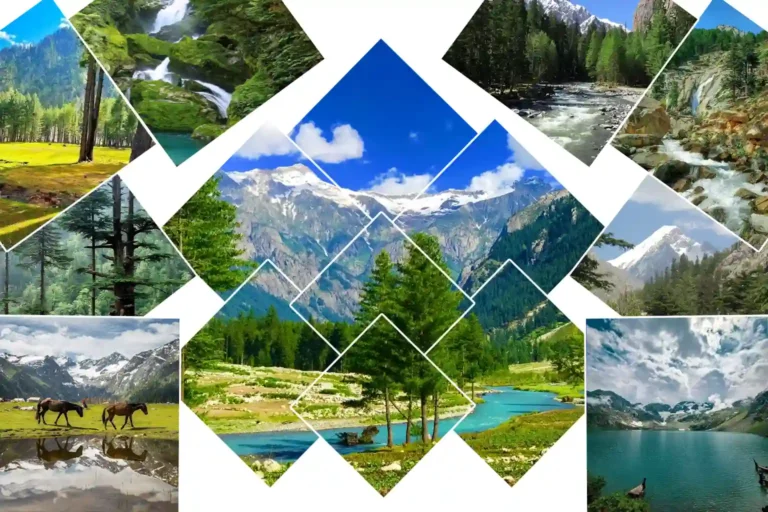
Kumrat Valley begins where the road gives up and the deodars take over. Beyond Thal, the asphalt fades into stone and stream, the air cools noticeably, and the Panjkora River tightens beside you. Then, almost without announcement, Kumrat appears, settled quietly inside one of the last untouched forest corridors in Pakistan.
At around 2,400 metres, the valley sits in Upper Dir, shaped almost entirely by water and forest. The Panjkora cuts the valley floor in a steady, glacier-cold line, while the deodars rise straight off the riverbanks in a way few other forests in the country still do. There are no towns inside the valley itself, only camps, wooden huts, a handful of jeep tracks, and the long quiet between them.
Kumrat has become one of the more talked-about summer destinations in Khyber Pakhtunkhwa, yet it remains deeply tied to its landscape. Jahaz Banda meadows lie above, Katora Lake rests further up still, and the Badgoi Pass crosses high into Kalam during the short summer window. The river runs through it all, tying the valley together.
It is a place that reveals itself slowly, not completely. The forest, the meadows, and the higher ground only begin to make sense when you stay longer. Beyond the first impression, Kumrat opens layer by layer.
Where is Kumrat Valley? Location and Geography
Kumrat lies deep within Upper Dir District, in the northwestern corner of Khyber Pakhtunkhwa, where the landscape shifts from open valley floor into a narrow, forested corridor. At 2,400 metres above sea level, it sits along the upper Panjkora River, with ridgelines climbing past 3,000 metres on both sides and snow-fed streams gathering from the higher ground above.
From Mingora, Kumrat is around 200 kilometres to the north, while Islamabad lies roughly 370 kilometres away by road. As the journey climbs upward through Chakdara, Timergara, and Dir, the valley narrows, the forests thicken, and the surrounding ridges of the Hindu Raj begin to dominate the skyline. By the time you reach Thal, the mountains feel close and enclosing, shaping both the landscape and the atmosphere.
The Three Landscapes of Kumrat
Kumrat is more than a single destination. The wider area unfolds in three distinct stages, each with its own terrain, elevation, and experience.
- At the entrance lies Thal, a small village where the road from Dir ends and the valley begins. It holds the only proper accommodation, the basic supplies, and the jeep stand for the route into the upper valley. The forest is already visible above the rooftops, but the real silence of Kumrat starts further up.
- Beyond Thal, the central corridor runs along the Panjkora for around 30 kilometres of forested track. This is where the deodar canopy is at its thickest, where most of the camps are pitched, and where the river is at its closest to the road. The light softens here, filtered through tall trees, and the valley feels increasingly removed from anything below.
- In the upper reaches, the landscape opens into side valleys and higher trekking routes. Jahaz Banda meadows, Katora Lake, and the Badgoi Pass crossing toward Kalam all lie in this upper zone. The forests thin, the terrain grows harder, and the connection to high-altitude ground becomes more visible.
Important: The road beyond Thal to the upper camping zone is a stream-crossed, rock-broken jeep track with sharp bends and narrow sections. Drive carefully and check road conditions during monsoon season (July to August), when rain can quickly turn the route impassable.
History of Kumrat Valley
Kumrat exists within a region whose history has been written more by terrain and clan than by major centres of power.
The Dir Kohistani Region
The upper parts of Dir, including the Kumrat area, are home to the Dir Kohistani community, one of the older inhabited groups of the Hindu Kush foothills. Their language, customs, and architecture stayed close to their older form because of how isolated the upper valleys remained until recent decades. Beyond their practical use, the forests and rivers of upper Dir carried cultural meaning. Wooden mosques built using interlocking deodar beams, with no metal joinery, are the clearest physical record of that older life. A few of them, including the well-known mosque at Thal, are still standing today, holding a connection to the past that feels deeply rooted in the landscape itself.
The Princely State of Dir
For much of its modern history, the wider Dir region functioned as a small princely state rather than part of any central administration. The Nawabs of Dir held control over the area until the state was merged into Pakistan in 1969. Through that period, most of upper Dir, including Kumrat, stayed outside formal infrastructure projects, which is partly why the forest cover here remained intact while other northern valleys were heavily logged. The valley’s older identity, shaped by forest, river, and clan, carried through that era largely undisturbed.
The Shift Toward Tourism
The opening of Kumrat as a travel destination is recent. Until the mid-2010s, the valley was used mostly by local communities for grazing, timber, and seasonal living. Tourism grew through word of mouth, drone photography, and social media coverage, and the valley now sees seasonal camping infrastructure from May through September. The change has been quick, but Kumrat still feels closer to its older self than most comparable destinations in KPK, holding on to the silence and forest cover that defined it long before the first jeeps began the climb.
Seasonal Character of Kumrat Valley

At around 2,400 metres above sea level, Kumrat stays cooler than the plains throughout the year, but the real difference lies in how each season reshapes the valley. The forests, the river, and the higher-altitude areas respond differently to changing weather, which means the experience of Kumrat is never the same twice. While summer remains the most popular season, the best time to visit depends on what you want to see and how far into the valley you plan to go.
Spring in Kumrat Valley: April to May
Spring feels like a gradual return to life. Snow begins to retreat from the lower zones, the Panjkora runs heavy with melt, and the deodars take on a darker, fuller green. Wildflowers appear along the trails, and the valley feels fresh, quiet, and lightly travelled.
- Temperature: 5 to 15°C
- Road access: Lower Kumrat opens late April, upper routes from mid-May
- Best for: Forest photography, quieter river camps, early-season visits
- Avoid if: You want to trek to Jahaz Banda or Katora, still snowbound
Summer in Kumrat Valley: June to August
Summer is when Kumrat is at its fullest. The valley is open, the river runs strong, and every route leads upward toward forests, meadows, and high alpine ground. While the plains remain hot, Kumrat stays comfortably cool, making it a natural escape from the heat below.
- Temperature: 12 to 24°C in the valley, much cooler at altitude
- All routes: Kumrat, Jahaz Banda, Katora Lake, and Badgoi Pass all open
- Best for: Camping, trekking, jeep safari, full valley access
- Watch out for: Peak crowds in July and August, monsoon road closures
Autumn in Kumrat Valley: September to October
Autumn changes the tone of the valley completely. The air sharpens, visitor numbers drop sharply after the first week of September, and while the deodars stay green, the lower-altitude scrub turns golden along the riverbanks. It is the season most regulars prefer, a quieter and more reflective version of the valley.
- Temperature: 3 to 14°C
- Access: All main routes open through September, upper treks close by late October
- Best for: Solitude, photography, clearer skies
- Best month: Late September into early October
Winter in Kumrat Valley: November to March
Winter transforms Kumrat into a different world. Snow closes the road from Thal upward, the camps clear out, and the upper valley disappears beneath a deep, silent layer of white. Some local activity continues at Thal, but the valley above becomes effectively cut off.
- Temperature: -10 to 5°C
- Upper access: Closed from November through April
- Best for: Snow landscapes from Thal only
- Not ideal for: Camping, trekking, or first-time visitors
Quick Pick: For the full Kumrat experience with all areas accessible including Jahaz Banda and Katora Lake, visit between mid-June and mid-September. For fewer crowds and the clearest light, late September into early October is the best single window.
Top Places to Visit in Kumrat Valley

Kumrat does not reveal itself through a single landmark. Instead, the valley unfolds through movement, along the river, through the forest, and into the higher ground above, where each location feels like a continuation rather than a separate destination.
The Deodar Forest: The Soul of Kumrat
The forest is the valley’s defining feature. The deodars run tall and straight along both banks of the Panjkora, often climbing in unbroken stands for hundreds of metres up the slopes. The canopy holds in moisture and quiet, the floor stays open beneath, and many of the best camping spots are simply clearings inside the forest itself. The light at dawn, when it first comes down through the canopy, is the kind of detail that is hard to describe and easy to remember.
- Location: Along the main jeep track, from 5 km above Thal onward
- Best for: Camping, forest walks, photography
- Highlights: Old-growth deodar stands, riverside clearings, dawn light
Panjkora River: The Line That Holds the Valley
The Panjkora is the line that holds Kumrat together. Cold, fast, and clear, it carries glacial melt from the higher ground down through the valley and continues south through Dir before joining the Swat River near Chakdara. The river is loudest in early summer and quietest by late autumn, and the camps along its banks live by its rhythm. The current is strong throughout, so swimming is not an option, but the sound carries through the forest at all hours.
- Location: Runs the length of Kumrat Valley
- Best for: Camping, photography, fishing (permit-dependent)
- Note: Strong currents, not safe for swimming or wading deep
Thal Wooden Mosque: A Window to the Past
The wooden mosque at Thal is one of the oldest surviving examples of traditional Kohistani timber construction in the region. Built without nails or metal fittings, it uses interlocking deodar beams and carved panels in a style now rarely seen. It sits at the centre of the village, open to respectful visitors year-round, and offers one of the few cultural stops in the entire valley itinerary.
- Location: Thal village
- Best for: Cultural context, architectural detail
- Access: Year-round, dress modestly
Do Kala Chashma: The Cold Spring
Do Kala Chashma is a cold spring on the way up to the main Kumrat camping zone. The water comes out of the rock at near-freezing temperature, and the small shaded clearing around it has become a standard stop on the jeep route. The walk in from the road is short, making it accessible without serious effort, and the sound of the spring carries through the trees long before it comes into view.
- Location: Along the main jeep track, mid-Kumrat
- Best for: A short pause on the way in
- Season: April to October
Kumrat Waterfall: A Forest Treasure
Kumrat Waterfall sits a short walk off the main track inside the forest. Snowmelt-fed, at its strongest from May through early July, it drops in stages down a moss-covered rockface into a shallow pool below. The clearing around it is one of the easier picnic spots in the valley, accessible without serious walking, and remains one of the most photographed locations in Kumrat.
- Location: Inside the central Kumrat forest zone
- Access: Short walk from the jeep track
- Best for: Photography, family stops
- Best season: May to early July
Jahaz Banda Meadows: The Ship’s Deck
Jahaz Banda is a high meadow above Kumrat, reached by a separate trek that usually starts from Thal or a nearby village. It opens out as a wide, gently sloping grassland surrounded by ridgelines, and is one of the better camping meadows in the wider region. The name means “ship’s deck”, referring to the meadow’s flat, raised character. At around 3,000 metres, it sits at the threshold of the high country, with shepherd encampments and a small number of trekking camps appearing through the summer months.
- Location: Above Kumrat, reached via a separate trek route
- Elevation: Around 3,000 metres
- Best for: Meadow camping, intermediate trekking, base for Katora Lake
- Season: June to September
Katora Lake: The Alpine Reward
Katora Lake sits above Jahaz Banda, at around 3,500 metres, reached by a steeper trek from the meadow. The lake is small, deep, and ringed by rocky slopes, with snow visible on the surrounding ridges into mid-summer. Its colour stays a deep green-blue well into autumn, and most visitors approach it as a day hike from a Jahaz Banda base camp rather than a one-day push from Thal. It is the high-altitude reward of the entire Kumrat trekking circuit.
- Location: Above Jahaz Banda Meadows
- Elevation: Approximately 3,500 metres
- Access: Half-day trek from Jahaz Banda
- Best for: Alpine photography, high-altitude trekking
- Season: July to September
Badgoi Pass: The Mountain Crossing to Kalam
Badgoi Pass is the high-altitude jeep route that connects Kumrat with Kalam in Swat. Open only for a short window each summer, it crosses some of the most remote terrain in the wider region. The route is rough and exposed, not suitable for casual travel, but for those moving between the two valleys it offers a crossing that bypasses the long road back through Dir entirely.
- Location: Upper Kumrat to upper Kalam (Utror side)
- Elevation: Around 3,400 metres at the pass
- Season: July to early September only
- Best for: Experienced jeep travellers, cross-valley routes
Mountains and Peaks of Kumrat Valley
Kumrat is enclosed by long, forested ridgelines belonging to the wider Hindu Raj mountain system. Unlike Swat or the upper Hindu Kush, the valley does not have a long list of named, climbed peaks. Instead, the ridges rise steadily from the deodar slopes into bare rock and occasional snow above 3,500 metres, with several distant summits from neighbouring ranges visible from the higher viewpoints in the valley.
| Peak / Ridge | Elevation | Notable For |
| Falaksair (visible from upper Kumrat) | 5,918 m | Highest peak in the Swat region, seen on clear days from Badgoi |
| Mankial Peak (visible from higher points) | 5,756 m | Prominent summit of the wider Swat–Kalam skyline |
| Upper Kumrat Ridge System | 3,500 to 4,500 m | Unnamed local ridges above Jahaz Banda and Katora |
| Badgoi Saddle | ~3,400 m | The pass crossing toward Kalam |
1. Falaksair (Distant View)
Falaksair at 5,918 metres is the highest peak in the Swat region and dominates the wider skyline visible from the upper reaches of Kumrat. On clear days, especially from the Badgoi Pass area, the permanent snow-covered summit appears in the distance to the northeast. It is not a Kumrat peak in the strict sense, but it forms part of the high horizon line that frames the valley’s upper world.
- Elevation: 5,918 metres
- Best viewed from: Badgoi Pass, Katora Lake ridges
- Season: Clearest views from September to early October
2. Mankial Peak (Distant View)
Mankial Peak at 5,756 metres is another dominant summit of the wider Swat landscape, visible from the higher viewpoints in upper Kumrat. It forms part of the ridgeline that separates the Swat drainage from the Dir side and adds to the layered horizon visible from Katora Lake and Jahaz Banda.
- Elevation: 5,756 metres
- Best viewed from: Upper Kumrat ridges, Jahaz Banda area on clear days
3. Upper Kumrat Ridge System
Above Jahaz Banda and Katora Lake, the valley walls rise into a series of unnamed and rarely climbed ridges and summits above 3,500 metres. The ridge system framing the Badgoi route represents some of the most remote high-altitude terrain accessible from any road in Upper Dir. Trekkers who reach this zone find a landscape almost entirely free of regular visitors, with the peaks here mostly unnamed and rarely photographed in detail.
- Location: Upper Kumrat, Jahaz Banda to Badgoi zone
- Elevation range: 3,500 to 4,500 metres
- Best for: Serious trekkers and experienced jeep travellers
- Season: July to early September
Lakes of Kumrat Valley

Kumrat is not a lake-rich region in the way Kalam or Naltar are. Its high country is dominated by forest, meadow, and river, with only a single major alpine lake reached directly from the valley side. That lake, Katora, is the centrepiece of the high-altitude experience for those willing to make the trek.
| Lake | Elevation | Access | Best For |
| Katora Lake | ~3,500 m | Full-day trek via Jahaz Banda | High-altitude trekking, alpine scenery |
| Seasonal Tarns near Badgoi | 3,400 m+ | Trek from upper Kumrat in summer | Remote alpine landscapes |
1. Katora Lake
Katora Lake at approximately 3,500 metres is the centrepiece of the Kumrat high country and the most visited natural feature of the upper valley. It sits in a rocky basin above Jahaz Banda, holding its deep green-blue colour well into the autumn, with snow visible on the surrounding ridges into mid-summer. The lake is reached by a steep trek from Jahaz Banda base camp, and most visitors approach it as a half-day hike rather than a one-day push from Thal. It is the high-altitude reward of the entire Kumrat trekking circuit.
- Elevation: Approximately 3,500 metres
- Access: Half-day trek from Jahaz Banda Meadows
- Best for: Trekkers comfortable with altitude and basic camping
- Season: July to September
2. Seasonal Tarns near Badgoi
In the upper zones near the Badgoi Pass, smaller seasonal tarns and snowmelt pools appear during the short summer window. These are not destination lakes but high-altitude features encountered by trekkers and jeep travellers crossing toward Kalam. The terrain here is rocky and exposed, and the water rarely lasts beyond the warmest months.
- Location: Upper Kumrat, Badgoi crossing
- Elevation: 3,400 metres and above
- Best for: Trekkers on the Badgoi route
- Season: July to August only
Meadows of Kumrat Valley

The meadows of Kumrat sit above the forest line, where the deodars thin out and the terrain opens into grassland. Compared to the more famous meadows of Kaghan or Astore, these stay quieter and less developed, with very few permanent structures and only seasonal use by shepherds and trekking camps.
Jahaz Banda Meadows
Jahaz Banda is the centrepiece of the Kumrat meadow zone. The grassland is wide and gently sloping, with seasonal streams cutting across it and ridgelines closing it in on most sides. The name, meaning “ship’s deck”, fits its raised and flat character. In summer the meadow holds shepherd encampments and a small number of trekking camps, but it remains far quieter than its counterparts in Kaghan or Hunza.
- Location: Reached via the Jahaz Banda trail, separate from the main Kumrat track
- Elevation: Around 3,000 metres
- Best for: Camping, wildflowers, base for the Katora Lake trek
- Season: June to September
Upper Kumrat Meadow Pockets
Beyond the main valley, smaller meadow pockets appear along the upper Kumrat track and around the Badgoi Pass route. These are not destination meadows but seasonal grazing grounds, often empty, sometimes used by Gujjar herding families in the warmer months. The grass thins quickly into rock and scree, and the meadows here feel less like settled spaces and more like brief openings in the high country.
- Location: Upper Kumrat track, Badgoi route
- Elevation: 2,800 to 3,400 metres
- Best for: Trekkers passing through to higher ground
- Season: July to August
Waterfalls of Kumrat Valley

The waterfalls of Kumrat are mostly snowmelt-fed and concentrated in the early summer months. They appear along the steeper sections of the valley walls and around the higher meadow trails, adding sound and movement to the forest landscape.
Kumrat Waterfall
Kumrat Waterfall is the main fall in the valley and sits inside the central forest zone. It drops in stages down a moss-covered rockface into a shallow pool below, with the sound carrying through the trees long before it comes into view. The flow weakens noticeably by late July, and by autumn it is more of a trickle than a fall.
- Location: Inside Kumrat forest, short walk from the jeep track
- Best for: Photography, family rest stop
- Season: May to early July (strongest flow)
Side-Stream Falls Along the Track
Along the Kumrat jeep track, smaller seasonal waterfalls appear on the cliff faces above the road. Most last only through May and June, fed directly by melting snow from the higher ridges. They are rarely named and easy to miss, but they add to the character of the drive between Thal and the upper camping zone.
- Location: Multiple points along the main jeep track
- Best for: Photography during the drive in
- Season: May to June
Rivers of Kumrat Valley
Water defines Kumrat as much as the forest does. There is really only one river in the valley, but it shapes everything around it, from the placement of the camps to the cold of the air at night.
Panjkora River: The Soul of Kumrat
The Panjkora is the only major river of Kumrat and one of the most defining rivers of Upper Dir. It rises from the snowfields above Badgoi and the high ground at the head of the valley, runs through the entire length of Kumrat, and continues south through Dir before joining the Swat River near Chakdara. Its green-blue colour and constant motion define the centre of the valley, and its presence is felt everywhere, from the riverside camps to the forest clearings several hundred metres above the water.
- Source: Snowfields and glaciers in upper Kumrat
- Character: Cold, fast, clear, deep green-blue
- Length through Kumrat: Around 35 kilometres
- Activity: Trout fishing in permitted stretches
- Note: Strong currents, not safe for swimming
Things to Do in Kumrat Valley
Kumrat is not a place where you sit still for long. The valley invites movement, whether along the river, through the forest, or higher into the meadows and ridges. Within a short distance, the terrain shifts from gentle forest walks to demanding multi-day treks, making Kumrat one of the more versatile outdoor destinations in Upper Dir.
Trekking in Kumrat Valley
The landscape around Kumrat is built for walking. Short trails through the deodar forest offer easy access to nature, while routes into Jahaz Banda and Katora Lake climb into higher, more demanding terrain. The further you go, the quieter the valley becomes, with fewer signs of regular travel beyond Jahaz Banda.
- Top treks: Jahaz Banda Meadows, Katora Lake, Badgoi Pass route
- Difficulty: Easy forest walks to multi-day high-altitude treks
- Best season: June to September (July to August for higher routes)
- Tip: Local guide recommended beyond Jahaz Banda
Camping Along the Panjkora
Camping is the core experience of Kumrat. Almost all visitors stay in canvas tents pitched at one of the riverside camps inside the forest zone. The setup is basic, with shared bathrooms, simple food, and generators that run only a few hours each night. The location is the point. The river runs ten metres from your tent, the deodars sit overhead, and the sky stays unusually dark.
- Best spots: Forest clearings between the Kumrat Waterfall area and the upper track
- Equipment: Most camps provide tents, bedding, and meals
- Permits: None required for the standard camping zones
- Best season: June to early September
Trout Fishing in the Panjkora
Fishing has long been a quiet part of life along the upper Panjkora. The cold, fast-moving stretches of the river support brown trout, with the best conditions found in the upper sections away from the main camping zones, where the water is undisturbed.
- Permit: Required, arranged through local fisheries staff or guides
- Best spots: Upper Kumrat away from camps, side streams
- Best season: April to October
- Tip: Early morning and late afternoon give the best results
Jeep Safari from Thal to Upper Kumrat
The jeep track from Thal to the upper camping zone is itself one of the main experiences of the valley. It crosses streams, climbs through dense forest, and passes most of the major roadside features, including Do Kala Chashma and the Kumrat Waterfall. Hiring a local jeep is the standard way to do it; private vehicles rarely make it past the first few kilometres.
- Route: Thal to upper Kumrat camps, around 30 km
- Time: One to two hours each way
- Vehicle: 4WD jeep, hired in Thal
- Tip: Travel during daylight only
Forest Walking in the Deodar Canopy
Walking the deodar forest, without any specific destination, is one of the more rewarding things to do in Kumrat. The terrain is gentle, the floor is open, and the light shifts noticeably through the day. Early mornings before the camps come awake feel especially still, with the sound of the river constant and the canopy holding in the cool air.
- Location: Forest zone above and below the main camps
- Best time: Early morning, late afternoon
- Highlights: Light through the canopy, riverside paths, dawn quiet
- Difficulty: Easy
Photography and Scenic Drives
Kumrat is a valley that changes with light. The same stretch of forest can feel completely different between morning and evening, and the river takes on different colours through the day. From the deodar canopy along the jeep track to the open meadows of Jahaz Banda, the landscape offers a wide range of scenes for photography.
- Best spots: Forest clearings, Kumrat Waterfall, Jahaz Banda Meadows, Katora Lake
- Best light: Early morning and late afternoon
- Best season: June to July (green landscapes), late September to early October (autumn quiet)
- Tip: Carry extra batteries, cold drains power quickly at altitude
Visit to the Thal Wooden Mosque
A short stop at the wooden mosque in Thal is one of the few cultural items in the valley itinerary. The structure is functional rather than monumental, but its traditional Kohistani construction is the main reason to visit. Dress modestly, ask before photographing, and respect the prayer hours.
- Location: Thal village
- Best for: Brief cultural context, architectural interest
- Access: Year-round
Where to Stay in Kumrat Valley
Where you stay in Kumrat depends on whether you prefer the comfort of Thal or the immersion of the forest camps. Most visitors split their time between the two, using Thal as a starting point and moving up into the valley for the main camping experience.
Thal: The Village Base
Thal offers the only conventional accommodation in the area, with small guesthouses, basic hotels, and a few mid-range options that have opened in the last few years. The village works well as a base for travellers who prefer a roof, want better food options, or plan to enter the valley on day trips by jeep.
- Options: Guesthouses, basic hotels, family-run lodges
- Rates: PKR 2,500 to 7,000 per night (season dependent)
- Best for: Families, those preferring solid accommodation
- Booking: Reserve in advance for July and August
Kumrat Forest Camps
Beyond Thal, accommodation becomes more limited but far more connected to the landscape. The camps along the Panjkora are clustered within the central forest zone, run seasonally from May through September, and offer tent accommodation with meals included. Facilities are simple, hot water depends on the camp, electricity runs only a few hours in the evening, and signal is absent.
- Options: Tented camps with shared facilities
- Rates: PKR 3,000 to 8,000 per person, full board
- Best for: First-time visitors looking for the standard Kumrat experience
- Season: May to September only
Jahaz Banda Camping
Higher up at Jahaz Banda, seasonal camps run from late June through September, set up by local operators who carry tents and supplies in for the duration of the trekking season. Conditions are basic but the location is among the best in the wider region, with the meadow opening out and the ridgelines closing in on all sides.
- Options: Seasonal trekking camps, bring-your-own
- Best for: Trekkers doing the Katora Lake route
- Season: Late June to September
General Accommodation Tips
- Peak season: July and August, book at least two weeks in advance
- Off-season: May, early June, and late September offer the best balance of price and access
- Payment: Cash only across the valley
- Supplies: Stock up in Thal; nothing of consequence is sold inside the valley
Practical Travel Information
Before heading into Kumrat, a few practical details can make the journey smoother. Conditions change quickly in the upper valley, and preparation makes a noticeable difference once you move beyond Thal.
Entry Requirements
- Pakistani nationals: No permit required
- Foreign nationals: Check current requirements with KPK Tourism
- ID: Carry CNIC or passport for checkpoints at Dir and Thal
Mobile Network and Connectivity
- Thal: Limited Jazz and Zong signal
- Kumrat forest zone: Almost no signal
- Jahaz Banda and Katora: No signal at all
- Tip: Download offline maps before leaving Dir, and let someone know your plan
Food and Local Cuisine
Food in Kumrat is functional rather than varied. Camp meals are usually built around rice, dal, chapati, and a meat curry, with eggs and parathas at breakfast. In Thal, the dhabas serve karahi, kebabs, and tea throughout the day, and fresh trout from the Panjkora appears on most camp menus through the season.
- Camps: Rice, dal, chapati, karahi, eggs, trout (in season)
- Thal: Wider options including kebabs, BBQ, and tea stalls
- Local specialities: Pan-fried river trout, slow-cooked mutton
- Note: Carry snacks for the jeep journey and any trekking day
What to Pack for Kumrat Valley
- Warm layers: Nights drop below 10°C even in mid-summer
- Rain jacket: Monsoon showers are routine in July and August
- Footwear: Trail shoes for the forest, proper boots for Jahaz Banda
- Cash: No ATMs in Thal or the valley; carry enough for the full trip
- Power bank: Camp electricity is unreliable
- Sun protection: UV is strong at altitude, even on cloudy days
- Insect repellent: Mosquitoes appear near the river in summer evenings
Conclusion
Kumrat does not need effort to reveal its beauty. Within a short distance of Thal, the forest begins to close overhead, the river runs close to the road, and the noise of the country below fades into something quieter. The deodars take over. The Panjkora takes the lead.
However, that sense of ease can be misleading. In reality, Kumrat is not a valley that reveals itself all at once; instead, its depth emerges gradually, often in moments that are easy to miss at first. The light filtering down through the canopy at dawn. The stillness of Katora Lake after the climb. The walk along the river before the camps come awake. The drive back toward Dir in late September, when the lower scrub turns gold and the crowds have already gone.
It is a valley that adapts to how you experience it. For some, it offers a long weekend in a riverside tent, enough to clear the noise of the cities below. For others, it becomes something more layered and harder to define, especially when time is given to move beyond the main camping zone and into the meadows and lakes above.
In the end, Kumrat is held together by two things. The river, which has shaped every metre of the ground you walk on. And the forest, which has held the river in place for a very long time. Everything else, including your visit, sits inside that arrangement, and in doing so, leaves something behind with those who pass through it.
Plan your perfect escape with a Kumrat Valley tour and immerse yourself in one of the last untouched forest valleys in Pakistan, where the river, the deodars, and the silence still hold the landscape together.
Frequently Asked Questions
Q1. What is the best time to visit Kumrat Valley?
The best time to visit Kumrat Valley is from mid-June to mid-September, when all areas including Jahaz Banda, Katora Lake, and the Badgoi Pass are fully accessible. For fewer crowds and clearer autumn light, late September into early October is ideal. The road from Thal upward usually closes from November to April due to snow.
Q2. What is the weather like in Kumrat Valley?
Kumrat remains cooler than the plains throughout the year due to its elevation of around 2,400 metres. In summer (June to August), temperatures range between 12°C and 24°C in the valley, with cooler conditions at altitude. Winters are cold, often dropping to -10°C from December through February. Weather can change quickly, especially during the monsoon season, so it is always advisable to check conditions before travelling.
Q3. How far is Kumrat Valley from Islamabad?
Kumrat Valley is approximately 370 kilometres from Islamabad via Chakdara, Timergara, and Dir, with a travel time of around 8 to 10 hours by road. The final 30 kilometres from Thal to the upper Kumrat camps adds another one to two hours by jeep, depending on weather and road conditions.
Q4. How far is Katora Lake from Kumrat?
Katora Lake is reached by a trek of around two to three days return, starting from Thal or the Jahaz Banda trail. Most trekkers reach Jahaz Banda Meadows first as a base camp, then continue up to the lake as a half-day hike. A 4WD is required to reach the trail head, and the trek itself is moderate to demanding.
Q5. What is Kumrat Valley famous for?
Kumrat Valley is best known for its dense deodar forests, the Panjkora River, and the riverside camping experience along the forest zone. It is also the main entry point for treks to Jahaz Banda Meadows and Katora Lake, and connects to Kalam in Swat via the Badgoi Pass during the short summer window.
Q6. What are the top places to visit in Kumrat Valley?
The main places to visit include the Kumrat deodar forest, the Panjkora River, the Thal Wooden Mosque, Do Kala Chashma, Kumrat Waterfall, Jahaz Banda Meadows, Katora Lake, and the Badgoi Pass crossing toward Kalam.
Q7. Is Kumrat Valley safe to visit?
Kumrat Valley is considered safe and receives a steady flow of visitors during the open season. The main concerns are weather-related: rough roads, rapid weather changes at altitude, and limited connectivity beyond Thal. As with any mountain destination, travellers should avoid night driving, check the road during heavy rain, and keep a local jeep driver’s contact handy.
Q8. Do I need a permit to visit Kumrat Valley?
Pakistani nationals do not require a permit to visit Kumrat Valley. Foreign visitors should check current requirements with KPK Tourism or a tour operator. All travellers should carry valid identification, as checkpoints are present at Dir and Thal along the route.
