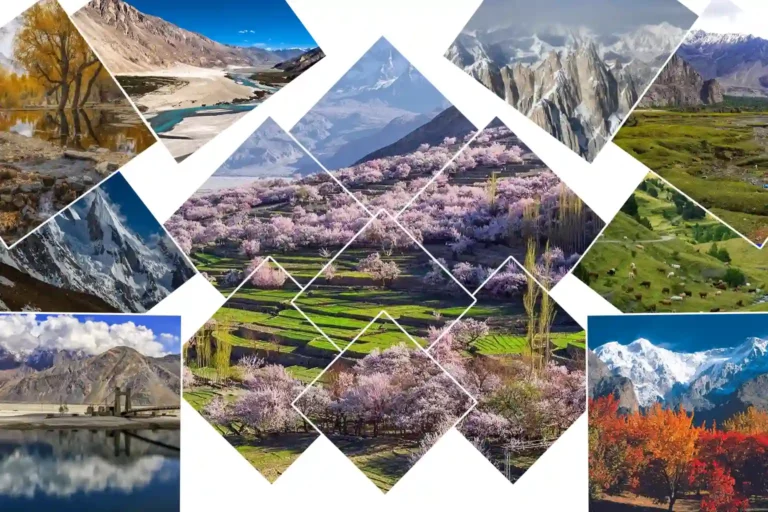
Khaplu Valley begins where the road bends east of Skardu and follows the Shyok River toward the far edge of Baltistan. The open floodplain narrows into a corridor of high ridgelines and scattered villages, and the air takes on the cooler rhythm of the upper river. Stone houses and orchards begin to gather along the terraces.
Khaplu town spreads along a broad river terrace at around 2,600 metres, beneath the watch of jagged peaks. Khaplu Palace rises above the settlement, while the Chaqchan Mosque anchors the old bazaar. Together they mark the valley as a centre of Ghanche heritage.
This is a quieter Baltistan than the busier routes of Skardu or Hunza. The river shapes the fields, the terraces hold the villages, and the heritage sits openly in stone and carved wood. Side tracks climb away toward meadow shelves and the high mountains to the east.
Khaplu moves at the pace of its own landscape: quiet, deliberate, and marked by the steady presence of palace and mosque above the water. It is the eastern limit of inhabited Baltistan, where the valleys thin toward Ladakh and the Siachen watershed. The longer you stay, the more that quiet becomes the point.
| Khaplu Valley | At a Glance |
| Province | Gilgit-Baltistan |
| District | Ghanche |
| Main base | Khaplu town |
| Nearest city | Skardu (around 100 km) |
| Nearest airport | Skardu Airport |
| Defining feature | Khaplu Palace and the Chaqchan Mosque |
| Valley type | Mountain river valley and heritage corridor |
| Elevation | Around 2,600 m at Khaplu town |
| Ideal duration | 2 to 5 days |
| Difficulty | Easy to moderate |
| Best month | June |
| Open season | May to October |
| Known for | Quiet Baltistan heritage east of Skardu |
Where is Khaplu Valley? Location and Geography
Khaplu lies in the eastern sector of Gilgit-Baltistan, in Ghanche District, at the outer edge of the main Baltistan catchment. At around 2,600 metres, the town sits on a broad river terrace where the valley opens after a series of tighter bends. This is where the inhabited corridor of Baltistan begins to thin toward the high mountains and the old borders.
The approach is by road from Skardu, tracing the Shyok River east through the wider valleys of Ghanche. Khaplu town stands where the terraces are broadest, with Khaplu Palace on a rise above the settlement and the Chaqchan Mosque at the edge of the old bazaar. Beyond the town, side valleys branch north and south toward high meadows and glacier-fed streams.
- Province and district: Gilgit-Baltistan, Ghanche
- Elevation: around 2,600 metres at Khaplu town
- Nearest city: Skardu, around 100 km and roughly three hours by road
- Main settlement: Khaplu town, set on a broad river terrace among orchards
- River: the Shyok, draining the upper catchment toward the Indus
- To the east: the borders of Ladakh and the Siachen watershed
- To the north: the broader Karakoram ranges and side valleys toward the high peaks
The Shape of Khaplu: River, Heritage, and the High Shelves
Khaplu is more than its monuments. The valley arranges itself in three broad layers, each marking a step from the river terrace toward the mountains.
- On the river terrace, the Shyok runs wide between orchards, poplar lines, and stone houses. This is where Khaplu town sits and where daily life concentrates, around the bazaar, the fields, and the river crossings.
- Above the town stands the heritage core, where Khaplu Palace rises on its terrace and the Chaqchan Mosque anchors the old settlement. These are the valley’s defining landmarks and the heart of its Ghanche identity.
- Beyond the last villages, the high shelves and side valleys climb toward meadow, scree, and glacier-fed stream. The terraces thin, the road roughens, and the routes turn toward the upper pastures and the peaks to the east.
Important: The roads beyond Khaplu town toward the upper meadows and side valleys are rough and seasonal. They suit high-clearance vehicles and local drivers, and the higher tracks can stay blocked by snow into June. Always check conditions before heading beyond the main valley.
History of Khaplu Valley
Khaplu’s history is fixed by its position on the eastern approach to Baltistan. For centuries the valley was a node on the routes linking Baltistan to Ladakh and Central Asia, and the river terrace gave settlement both water and a defensible footing. Its heritage is written into the stone of the palace and the carved beams of the mosque.
1. A Terrace on the Eastern Routes
Settlement in Khaplu has always followed the river and its terraces, where water and arable land allowed villages to take root. The valley sat on the trade and migration routes between Baltistan, Ladakh, and beyond, with the surrounding mountains marking both boundary and protection. Terrace agriculture of wheat, barley, and fruit supported the communities that grew here.
2. The Chaqchan Mosque and the Arrival of Islam
The Chaqchan Mosque dates to the fourteenth century and marks the arrival of Islam in Baltistan, standing as one of the oldest surviving mosques in the region. Its architecture blends Tibetan, Persian, and local influences, shaped by the timber and stone of the valley itself. Its carved woodwork has anchored the old settlement core for more than six centuries.
3. The Yabgo Rajas and Khaplu Palace
Khaplu was long a seat of the Yabgo rulers, whose authority shaped the eastern valleys of Baltistan. Khaplu Palace, built in the mid-nineteenth century on a rise above the town, reflects that history in its stone-and-timber form. Restored in recent decades and now run as a heritage hotel, it remains the valley’s most visible link to its past.
Seasonal Character of Khaplu Valley

At around 2,600 metres, Khaplu stays cool through much of the year, but the season still reshapes the valley. Road access, river volume, and the opening of the upper meadows all shift with the calendar, and the heritage core stays reachable longer than the high ground. Summer is the most reliable time to visit, though the best season depends on how far up the valley you intend to go.
Spring in Khaplu Valley: April to Early June
Spring clears the snow from the valley floor and lower terraces. The river rises with meltwater, the orchards blossom, and the road to Khaplu becomes reliable after the early closures. The upper meadows and side tracks, though, can stay shut until later in the season.
- Temperature: approximately 5 to 18°C in the town
- Access: main road open; upper meadows often still closed
- Best for: orchard blossom, quiet villages, heritage visits
- Avoid if: you are set on the high meadows or side valleys early
Summer in Khaplu Valley: June to August
Summer opens the full valley. The river runs high with glacial melt, the high meadows become reachable, and the markets are at their busiest. Days stay moderate, and short treks toward the meadow shelves and side valleys are practical. This is the most active season in the valley.
- Temperature: approximately 14 to 28°C, cooler at altitude
- Access: full valley open, including meadows and side valleys
- Best for: trekking, meadows, heritage, market life
- Watch out for: high river flow and the busiest weeks
Autumn in Khaplu Valley: September to October
Autumn brings clear air, the harvest, and a thinning of crowds. The river settles to a steadier flow, the terraces turn gold, and the heritage core stays easy to reach. Higher tracks can catch the first snow as the month turns.
- Temperature: approximately 4 to 16°C
- Access: lower valley open through October; upper tracks closing
- Best for: harvest, clear views, heritage, calm travel
- Best month: September for colour and stable routes
Winter in Khaplu Valley: November to March
Winter draws the valley down to its lower settlements. Snow and cold close the upper tracks and meadows, and life concentrates around the town. Tourism fades, and the valley takes on a still, quiet character.
- Temperature: approximately -8 to 6°C
- Access: upper valley closed; movement limited to the lower basin
- Best for: snow stillness and solitude (prepared travellers only)
- Not ideal for: first-time visitors or anyone heading high
Quick Pick
For the full Khaplu experience, with the road open and the meadows accessible, visit between mid-June and late September. For the harvest, clear air, and the heritage core at its calmest, September is the finest single month.
Top Places to Visit in Khaplu Valley

Khaplu does not reveal itself through a single view so much as through a slow movement from the river terrace to the high shelves above. The heritage core sits at its heart, while the river, the meadows, and the side valleys draw the eye toward the quieter edges of eastern Baltistan.
Khaplu Palace
Khaplu Palace, the seat of the Yabgo rajas, rises on a terrace above the town against a backdrop of mountains. Built in the mid-nineteenth century and carefully restored, it now serves as both a heritage site and a hotel, its stone-and-timber form reflecting centuries of local craft. It is the valley’s defining landmark and an easy first stop from the main road.
- Location: above Khaplu town, beside the main road
- Best for: heritage, architecture, gardens, photography
- Tip: arrive early for soft light and quieter grounds
- Season: open and most rewarding from May to October
Chaqchan Mosque
The Chaqchan Mosque, founded in the fourteenth century, is one of the oldest mosques in Baltistan and anchors the old settlement core. Its carved woodwork and stone base blend Tibetan, Persian, and local influences in a way found nowhere busier. Standing at the edge of the old bazaar, it carries the deep history of the region in its timber.
- Location: edge of the old bazaar, Khaplu town
- Best for: heritage, architecture, quiet visits
- Tip: dress modestly and respect prayer times and photography rules
- Highlights: carved beams, Tibetan-Persian-local design
Khaplu Town
Khaplu town stretches along the river terrace, shaped by water, orchards, and the old settlement pattern. Mud-brick and stone houses, small bazaars, and fruit trees define its core, with the main road running parallel to the river. It is the valley’s primary base for heritage, supplies, and the routes to higher ground.
- Location: on the river terrace, centre of the valley
- Best for: accommodation, supplies, orientation
- Highlights: bazaars, orchards, traditional Balti houses
The Shyok River Corridor
The Shyok is the line that organises the valley, its course followed by the main road and most of the villages. Irrigation channels branch from it to feed the orchards and terraced fields along the floor. The river runs highest in spring and early summer, swollen with meltwater from the east.
- Location: along the main road, Skardu to Khaplu and beyond
- Best for: riverside walks, terrace lanes, landscape views
- Highlights: irrigation channels, terraces, river bends
- Season: highest flow in spring and early summer
Khaplu Viewpoint
A short drive or walk above the town opens a clear view of the river’s course, the layout of Khaplu, and the surrounding ridgelines. The terraces spread green below, and the palace stands out against the mountain backdrop. The light is best in clear weather between May and October, early or late in the day.
- Location: above Khaplu town, short climb from the settlement
- Best for: photography, orientation, reading the valley’s layout
- Season: clearest from May to October
Upper Khaplu Meadows
Beyond the last permanent villages, the valley climbs into grassy meadow shelves framed by mountain ridges. Reached by jeep track or footpath as the terraces thin, they mark the start of the alpine ground. Access is best from June to September, once the snow line recedes.
- Location: above the last villages, upper valley
- Access: jeep track or footpath
- Best for: day trekking, meadow scenery, alpine air
- Season: June to September
Side Valleys and the Road to Hushe
Side valleys branch from the main corridor, climbing along glacial runoff toward smaller hamlets and high pastures. To the south, the route up the Hushe Valley opens the way toward Masherbrum and other striking Karakoram peaks. These routes thin quickly above the treeline and usually need a jeep or a local driver.
- Location: side valleys off the main corridor, including the Hushe road
- Best for: remote trekking, pasture scenery, the Hushe approach
- Note: rough tracks; a jeep or local driver is usually needed
- Season: high summer, once the snow has cleared
Rivers of Khaplu Valley

Water shapes Khaplu as much as heritage does. The Shyok runs the length of the valley, feeding the terraces through hand-cut channels and setting the line that the road and villages follow. It is the thread that ties the settled floor to the glaciers and borders to the east.
The Shyok River: The Valley’s Spine
The Shyok River rises far to the east, fed by the glaciers of the Siachen region and the Ladakh ranges, and runs west past Khaplu to join the Indus near the Skardu basin. Wide, cold, and grey with glacial silt, it defines the centre of the valley and carries its meltwater toward the plain. The main road follows its bends for most of the journey east.
- Character: wide, cold, glacier-fed, silt-grey
- Activity: riverside and terrace walks
- Note: water rises sharply in spring and early summer; keep clear of the banks after melt
The Irrigation Channels and Side Streams
From the main river, a network of channels carries water across the terraces to the orchards and fields that define the valley floor. Higher up, glacier-fed side streams feed the Shyok from the tributary valleys, running strongest through the warm months. Together they shape the green terraces against the dry slopes.
- Source: Karakoram glaciers and side-valley snowfields
- Best viewed from: the terraces and orchard lanes around Khaplu
- Season: strongest flow in late spring and summer
Meadows and High Pastures of Khaplu Valley

As the valley climbs beyond the terraces, the ground opens into high meadow and summer pasture. These upper shelves feel rawer and more remote than the valley floor, with open grass running up to scree and glacial runoff. In the warm months, herders bring livestock here to graze.
Upper Khaplu Meadows
Above the last permanent villages, the upper meadows mark the transition from cultivated terrace to alpine ground. The grass spreads across open shelves framed by ridgelines, and temporary herder camps appear through the summer. Access is best from June to September, by jeep track or on foot as the terraces thin.
- Location: above the last villages, upper valley
- Elevation: rising well above the 2,600 m valley floor
- Best for: day trekking, meadow scenery, alpine air
- Season: June to September
Tributary Valleys and Pastures
Beyond the main corridor, tributary valleys branch toward smaller catchments, each holding a few homes and patches of grazing land. Movement into them rises in summer, as families and livestock move to higher pastures and temporary camps. They are the quietest, least travelled corners of Khaplu.
- Location: tributary valleys off the main corridor
- Best for: remote walks, pasture scenery, solitude
- Season: high summer, as herders move up
Mountains and the Hushe Gateway

Khaplu’s high peaks lie not in the valley itself but in the side valleys that branch from it, chief among them the Hushe Valley to the south. The valley’s quiet heritage sits beneath a ring of serious mountains, and Khaplu serves as the gateway town for reaching them. Beyond the meadows, the land climbs quickly toward the heart of the Karakoram.
From the Shyok corridor, the route up the Hushe Valley opens the way toward Masherbrum and a cluster of demanding summits. These are serious mountaineering objectives, reached only by long treks from the last villages, and they sit well beyond the reach of a casual visit.
| Peak | Elevation | Notable for |
| Masherbrum (K1) | 7,821 m | The dominant peak above Hushe, first surveyed as K1 |
| K6 | 7,282 m | A formidable summit deep in the Hushe region |
| K7 | 6,934 m | A demanding rock-and-ice peak near Hushe |
| Laila Peak | ~6,096 m | Known for its sharp, leaning spire above the glaciers |
For most visitors, these peaks remain distant names rising beyond the meadows rather than places to reach. But from Khaplu, with the side valleys climbing toward them, the scale of the eastern Karakoram becomes clear.
Things to Do in Khaplu Valley

Khaplu rewards a slower kind of travel, built around heritage, river terraces, and the quiet movement of the valley. Within a short distance the experience shifts from the palace and the mosque to terrace walks and tracks bound for the high meadows. It suits both the cultural traveller and those drawn deeper toward the mountains.
Touring the Palace and Mosque
The heritage core is the natural starting point. A visit takes in Khaplu Palace, with its restored rooms and gardens, and the centuries-old Chaqchan Mosque at the edge of the old bazaar. Early morning brings softer light on the stonework and quieter grounds.
- Location: Khaplu town and the old settlement core
- Best for: heritage, architecture, photography
- Tip: dress modestly at the mosque and check photography rules
- Time needed: a half day for both
River Terrace Walks
The terraces make for easy, pleasant walking between orchards, stone walls, and irrigation channels. The paths trace the practical geography of the valley, past fields and poplar lines along the river. Mornings are cool and quiet, and the light is soft across the terraces.
- Location: terraces around Khaplu town
- Best time: May to October, when fields are active
- Difficulty: easy
- Highlights: orchards, channels, river views, village life
Trekking to the Meadows and Side Valleys
Above the town, jeep tracks and footpaths climb toward the high meadows and tributary valleys. Shorter walks reach the nearer shelves in a day, while longer treks head deeper toward Hushe and the high peaks. The further you go, the more remote and committed the terrain becomes.
- Top routes: upper Khaplu meadows, tributary valleys, the Hushe approach
- Difficulty: easy day walks to serious multi-day treks
- Best season: June to September
- Tip: a local guide is worth arranging beyond the meadows
Camping by the River and Meadows
Camping suits the upper valley, on the river terraces and in the high meadows above the villages. Sites are usually reached by jeep and need full self-sufficiency, with local advice on water and weather. The nights are cold and clear, with the river close by.
- Best spots: river terraces, upper meadows
- Equipment: warm gear and self-sufficiency essential
- Access: usually by jeep
- Best season: June to September
Jeep Tracks to the High Country
The drive is part of the experience in upper Khaplu. Side tracks branch from the main corridor toward the meadows, hamlets, and the road to Hushe. Beyond the town the surfaces roughen, so a high-clearance jeep and a capable driver are essential.
- Access: local jeeps for hire in Khaplu
- Terrain: rough tracks, 4WD beyond the town
- Best for: reaching meadows, hamlets, and the Hushe approach
- Season: driest and most reliable in summer
Photography Across the Valley
Khaplu offers a wide range of subjects, from the palace and the carved mosque to the terraces and the distant ridgelines. The light shifts quickly between the valley walls, and late afternoon brings strong contrast on the terraces and heritage buildings. Mornings are best for the stonework.
- Best spots: Khaplu Palace, Chaqchan Mosque, the viewpoint, the river
- Best light: early morning and late afternoon
- Best season: summer for green, autumn for harvest colour
- Tip: keep a layer handy for the afternoon wind
Where to Stay in Khaplu Valley
Where you stay in Khaplu depends on whether you want heritage comfort in the town or self-sufficient camping toward the high routes. Most visitors base themselves in Khaplu town, where access, supplies, and the main sites are within reach. Move upvalley, and facilities thin as the landscape opens toward the meadows and side valleys.
Khaplu Town: The Main Base
The town holds the widest choice of places to stay, from the restored palace hotel to guesthouses and basic lodges near the main road. It is the most practical base, with the valley’s main market, medical point, and transport hub. Booking ahead is wise in the summer season, and payment is often in cash.
- Options: heritage palace hotel, guesthouses, basic lodges
- Location tip: stays near the palace and main road are most convenient
- Booking: reserve ahead for the summer season
- Payment: cash is useful; cards are not widely accepted
Khaplu Palace Hotel
For a heritage stay, the restored palace itself operates as a hotel, with rooms in the old building and its gardens. It is the most distinctive place to stay in the valley, combining Yabgo architecture with views over the terraces and river. It books up well in advance during the main season.
- Type: restored heritage palace hotel
- Best for: a heritage experience and direct access to the palace
- Booking: reserve early, especially in summer
Upper Valley and Camping
Beyond the town, accommodation gives way to camping on the river terraces and in the high meadows, with limited homestays in some side villages. These sites mostly serve trekkers and need your own gear and supplies. They offer the quietest, most immersive nights in the valley.
- Camping: river terraces and upper meadows
- Homestays: limited options in some side villages
- Best for: trekkers and remote stays
Practical Travel Information
A few practical details make the journey into Khaplu smoother. Conditions change quickly with altitude and season, and preparation matters once you move beyond Skardu and the main valley toward the high ground.
Entry and Permits
- Pakistani nationals: no permit required for Khaplu Valley itself
- Foreign nationals: check current rules with Gilgit-Baltistan authorities, as areas toward the Siachen watershed and some side valleys can be restricted
- ID: carry your CNIC or passport for checkpoints
Getting There
- Nearest city: Skardu, around 100 km and roughly three hours by road
- By air: Skardu Airport, with flights from Islamabad, is the nearest air link
- By road: the long Karakoram Highway route via Gilgit and Skardu is the alternative for those driving north
- Within the valley: local jeeps for the upper meadows, hamlets, and side valleys
Mobile Network and Connectivity
- Coverage is reliable in Khaplu town but fades quickly upvalley
- SCOM generally offers the best reach in this part of Gilgit-Baltistan
- Signal is minimal to absent toward the meadows and side valleys
- Tip: download offline maps before leaving Skardu or Khaplu
Food and Local Cuisine
Food in Khaplu is simple and local, centred on the town and thinning further up the valley.
- Town: wheat and barley breads, dairy, and home-style Balti cooking in guesthouses
- Orchards: apricots and other fruit in season, fresh and dried
- Bazaar: Khaplu’s market covers basics; imported items are limited
- Upper valley: carry your own supplies for the meadows and side valleys
What to Pack for Khaplu Valley
- Warm layers: nights are cold even in summer, more so at altitude
- Sun protection: strong UV on the open terraces and at altitude
- Footwear: walking shoes for the terraces, sturdy boots for the high tracks
- Cash: limited banking, so bring enough for your whole stay
- Rain and wind protection: weather shifts quickly in the shoulder months
- Supplies: stock specialist trekking gear in Skardu or Gilgit
Travelling Responsibly
Khaplu’s terraces, meadows, and heritage sites are fragile and lightly serviced, so a little care keeps them intact.
- Carry out all litter, especially plastic and food packaging
- Camp on established sites, not too close to the main drainage or on fresh pasture
- Stay on marked trails in the upper meadows to protect the alpine ground
- Respect signage, dress codes, and photography rules at the palace and mosque
- Avoid washing or polluting near the river, which supplies downstream settlements
- Buy food and supplies in Khaplu to support local, community-run businesses
Conclusion
Khaplu does not need effort to reveal its character. East of Skardu, the valley opens along the Shyok between river terraces and stone-built villages. The palace rises above the town, the mosque anchors the old bazaar, and the orchards spread green across the floor.
However, the valley is more than its surface. Khaplu holds a quiet that the busier hubs have lost, shaped by terrace, heritage, and the steady presence of water. It surfaces in the carved beams of the mosque, the soft light on the palace stonework, and the side tracks climbing toward the high meadows.
It is a valley that adapts to how you experience it. For some, it is a calm heritage stop at the eastern edge of Baltistan. For others, it is the doorway to the meadows and the Hushe peaks, the last settled ground before the mountains.
In the end, Khaplu is both a destination and a threshold. The meeting of river, terrace, palace, and mountain forms a landscape that feels complete in itself, yet points quietly beyond. Rather than asking to impress, the valley keeps its calm, and stays with those who take the time to see it.
Frequently Asked Questions
1. What is the best time to visit Khaplu Valley?
The best time to visit Khaplu is from May to October, when the Skardu road clears and the river terraces, heritage sites, and upper meadows open for travel. June to September is the most active window, while September brings the harvest, clear air, and the calmest heritage core. Upper tracks close from November.
2. How many days do I need for Khaplu Valley?
Most travellers find two to five days enough for Khaplu. A short visit covers the palace, the Chaqchan Mosque, the town, and the terraces, while longer stays allow treks to the upper meadows or trips toward Hushe and the side valleys. Trekkers heading for the high peaks should plan considerably more time.
3. How do I reach Khaplu Valley?
Khaplu is reached by road from Skardu, following the Shyok River east through Ghanche, a drive of around 100 kilometres and roughly three hours. Skardu itself is reached by air from Islamabad via Skardu Airport, or by the long Karakoram Highway route from Gilgit. Private cars, hired jeeps, and local vans run from Skardu.
4. Do I need a permit to visit Khaplu Valley?
Pakistani nationals do not need a permit for Khaplu Valley itself. Foreign visitors should check current rules with Gilgit-Baltistan authorities, as areas toward the Siachen watershed and some side valleys can be restricted. Carry valid identification for checkpoints along the route.
5. What is Khaplu Valley famous for?
Khaplu is best known for Khaplu Palace, the restored seat of the Yabgo rajas, and the Chaqchan Mosque, one of the oldest mosques in Baltistan. It is also valued as a quieter heritage destination east of Skardu and as the gateway toward the Hushe Valley and its high peaks.
6. Is Khaplu Valley suitable for families?
Khaplu can work well for families, as the palace, the mosque, the town, and the terraces are easy to reach and the valley floor is gentle. Travel should still be planned around the season, road access, and accommodation. Extra care is sensible with children or older travellers on the rough upper tracks and high meadows.
7. Can I stay in Khaplu Palace?
Yes. The restored palace operates as a heritage hotel, with rooms in the old building and its gardens, making it the most distinctive place to stay in the valley. It books up well in advance during the summer season, so reserve early.
8. What activities are possible in Khaplu Valley?
Popular activities include touring Khaplu Palace and the Chaqchan Mosque, walking the river terraces, photography at the viewpoint, and trekking toward the upper meadows or the Hushe approach. The valley also serves as a quiet cultural stop for travellers exploring eastern Baltistan.
